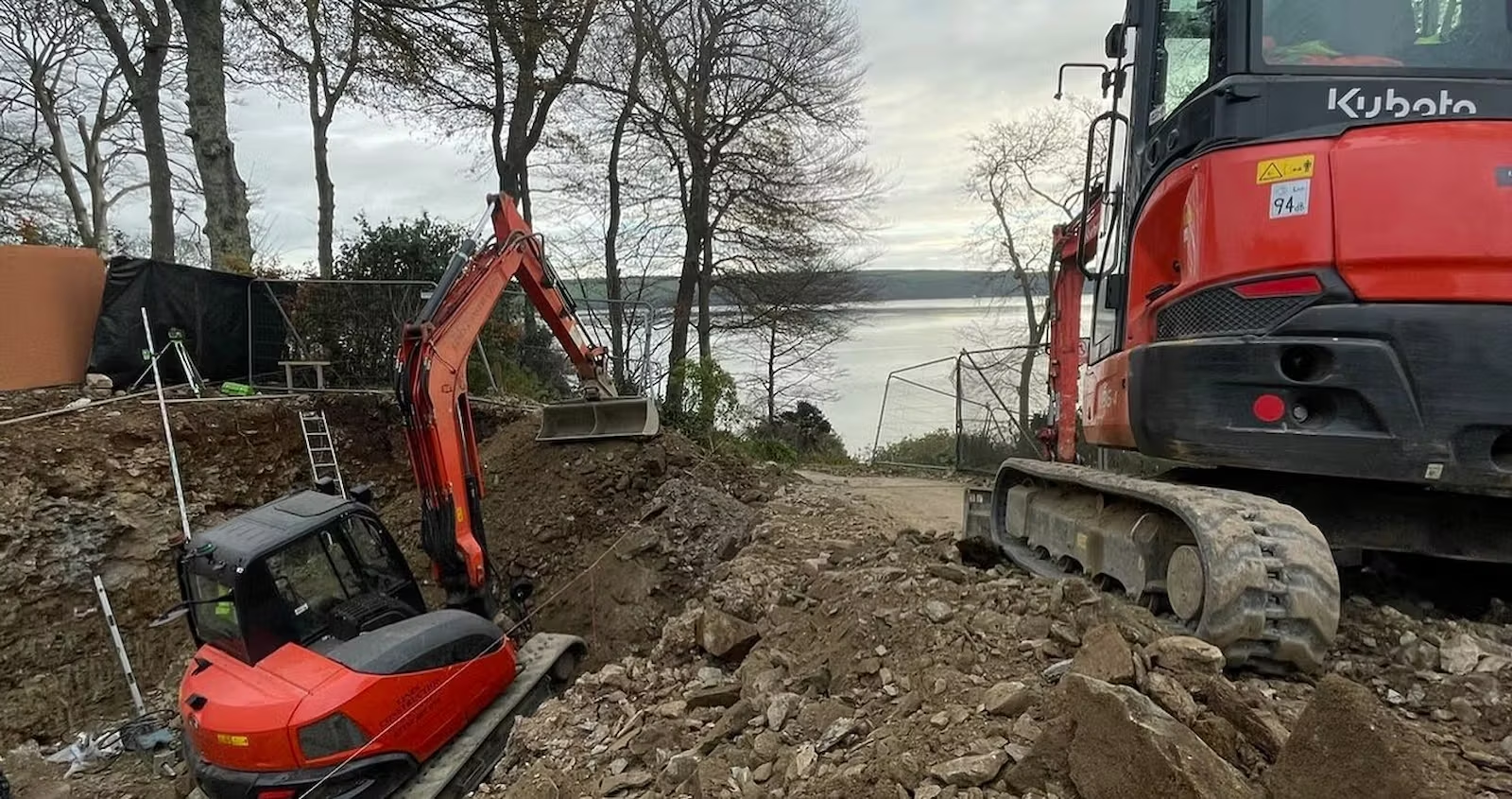
Coastal Renovation | Passivhaus Build | Luxury Homes
Why Coastal Properties Demand a Different Level of Expertise
The conditions facing a coastal property in Cornwall are categorically different from those facing an inland home. Builders who apply standard specifications to coastal sites — without adapting for salt air, wind exposure, moisture ingress, and thermal performance — create properties that deteriorate rapidly and carry growing maintenance liability. Future-proofing a coastal home requires technical depth across five interconnected disciplines:
- Salt and corrosion resistance — material selection that withstands the chemically aggressive coastal atmosphere.
- Wind and weather tightness — building envelopes engineered to prevent water ingress under extreme pressure differentials.
- Thermal performance — insulation and glazing specifications that keep running costs low despite high exposure.
- Structural resilience — foundations and superstructure details designed for the dynamic loads of a coastal site.
- Planning and heritage sensitivity — designs that work with Cornwall's AONB and coastal planning frameworks, not against them.
Technical Depth: How We Engineer for Coastal Conditions
Technical depth in coastal construction means understanding that every material choice, every junction detail, and every drainage decision has consequences that amplify in a salt-rich, high-wind environment. What performs adequately inland can fail within years on the Cornish coast.
Material Selection for Coastal Longevity
The materials that define the exterior of a coastal home — cladding, roofing, glazing, fixings, and external joinery — must be specified to withstand decades of salt exposure. As Millboard Approved Installers, Warvena uses composite systems engineered specifically for high-exposure environments, delivering coastal aesthetics without the maintenance burden of traditional timber. Every material we specify is evaluated for its whole-life performance in coastal conditions — not just its appearance at handover.
Passivhaus Principles Applied to Coastal Homes
Cornwall's Atlantic climate — mild but wet and windy — makes high-performance building envelopes especially valuable on the coast. Passivhaus principles address this directly: continuous insulation eliminates thermal bridging, mechanical ventilation with heat recovery (MVHR) manages moisture without relying on opening windows in driving rain, and triple-glazed units provide both thermal performance and acoustic comfort in exposed positions. A Passivhaus-standard coastal home consumes up to 90% less heating energy than a conventional build — dramatically reducing running costs while protecting the building fabric from condensation-related deterioration.
Airtightness and Weather Tightness on Exposed Sites
On exposed coastal sites, airtightness is not an optional upgrade — it is a fundamental requirement for long-term fabric integrity. Wind-driven rain can find ingress routes through details that would be entirely adequate on a sheltered inland site. Our technical approach to airtightness — informed by Passivhaus methodology and tested to rigorous standards — ensures the building envelope performs as designed, year after year, regardless of what the Atlantic sends its way.
See how these principles came together in our coastal project at Three Mile Beach, Gwithian — a project that demonstrates what technical depth looks like in practice on Cornwall's Atlantic coast.
Thought Leadership: Planning Ahead of the Climate and Regulatory Curve
"Exciting buildings that stand the test of time." — Warvena Construction
Thought leadership in coastal construction means anticipating the pressures that will bear on a property over its lifetime — not just designing for today's conditions. The UK's coastal environment is changing: storm frequency is increasing, planning regulations for coastal development are tightening, and energy performance requirements are rising year on year. Homeowners and developers who invest in future-proofing now avoid far more expensive retrofitting later — and protect their asset value in a market where buyers are increasingly scrutinising energy performance, resilience, and sustainability credentials.
Navigating Cornwall's Coastal Planning Environment
Much of Cornwall's coastline falls within Areas of Outstanding Natural Beauty (AONB), and development near the shore must navigate sensitive ecological, heritage, and flood-risk designations. Warvena's thought leadership means we engage with these constraints proactively — advising clients on what is achievable before planning applications are submitted, and designing within the grain of the planning framework rather than against it. Our track record at Trevaunance Cove and Crackington Haven reflects this approach in practice.
Future Energy Regulation and EPC Performance
EPC requirements for residential properties are tightening. Properties that currently meet minimum standards may fall below future thresholds — creating a compliance liability and a market discount for owners who have not invested in performance upgrades. Future-proofing a coastal home today — through improved insulation, air source heat pump integration, triple glazing, and MVHR — positions the property ahead of regulatory change and makes it more attractive to an increasingly energy-aware buyer pool.
Warvena's Coastal Projects Across Cornwall
Our portfolio of coastal work demonstrates the breadth and depth of our expertise. From the Atlantic-exposed north coast to the sheltered Fal estuary, each location presents its own specific conditions — and each demands a tailored technical response.
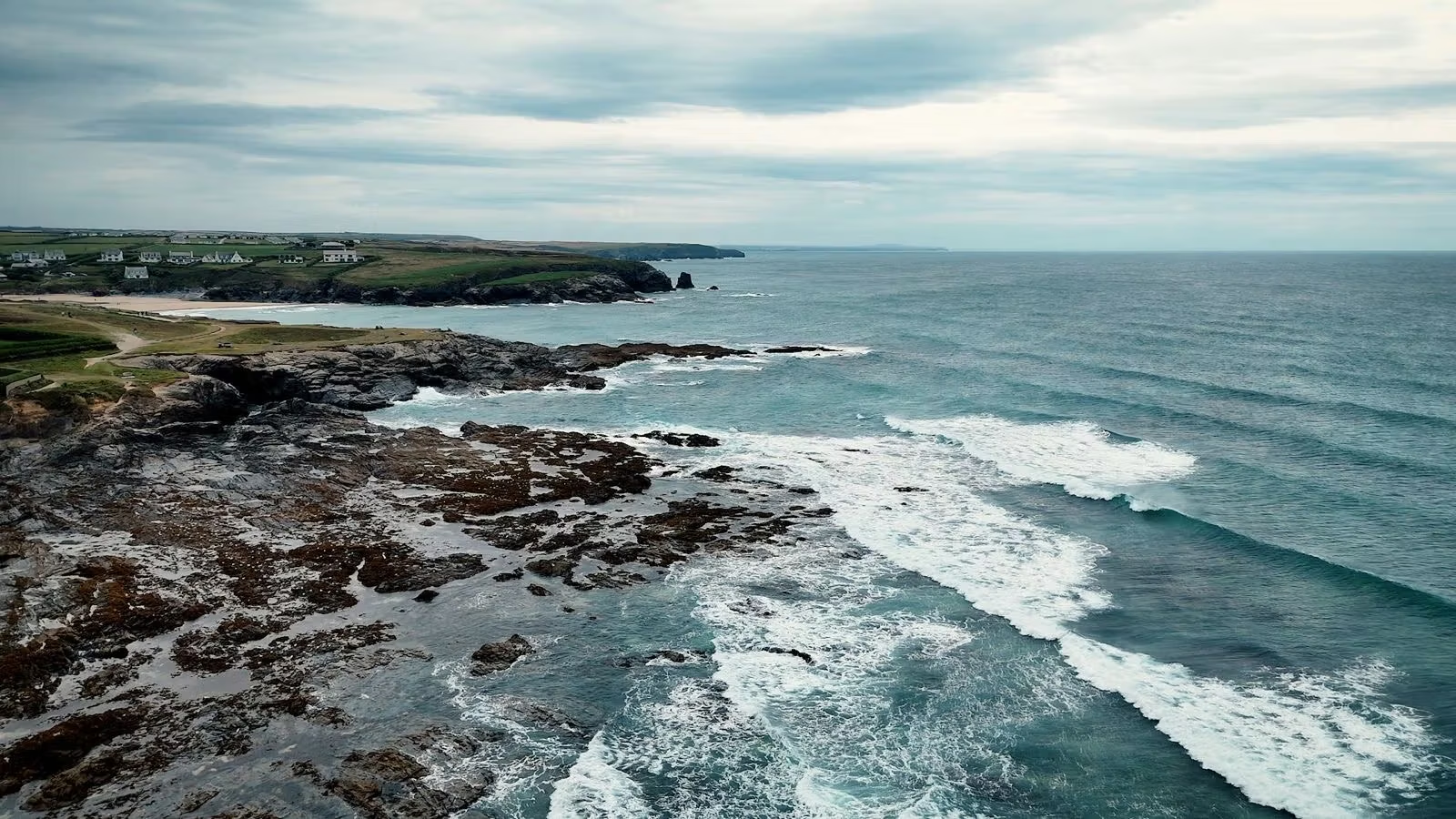
Three Mile Beach, Gwithian
Our Three Mile Beach project at Gwithian required every dimension of coastal technical expertise — from salt-resistant material selection to an airtight, high-performance building envelope designed for sustained wind and weather exposure beside one of Cornwall's most iconic Atlantic beaches.
Crackington Haven
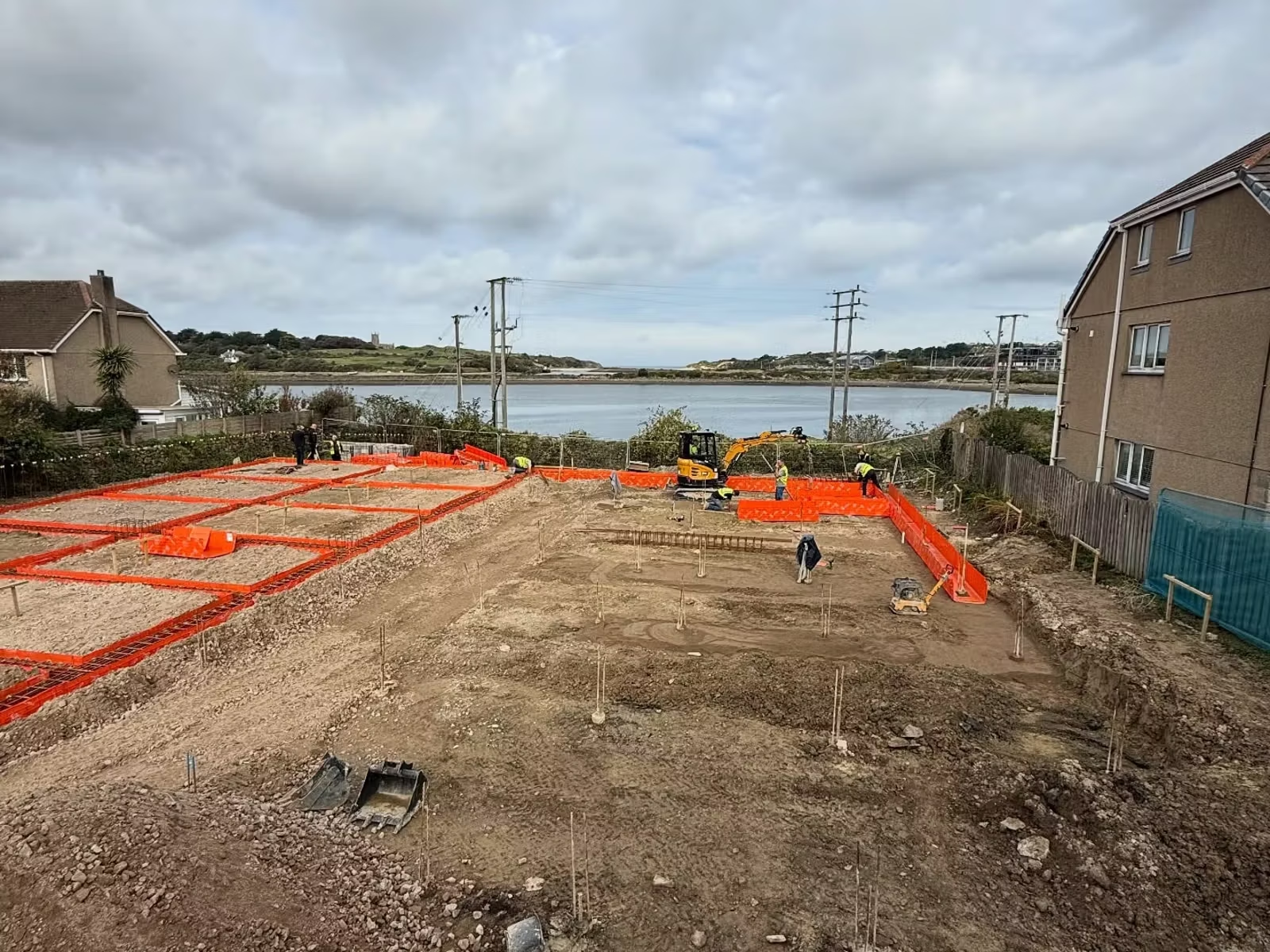
The Crackington Haven renovation and extension demonstrates our ability to deliver high-quality construction within a sensitive coastal AONB — balancing structural improvement, energy performance upgrading, and planning-sensitive design in a single project.
The Ark, Constantine Bay
The Ark at Constantine Bay sits on one of Cornwall's most dramatic north coast headlands. This project required the full integration of coastal resilience, high-performance energy specification, and bespoke architectural ambition — delivered to the standards our clients expect and the conditions of the site demand.
Explore all our completed work in our full project portfolio.
Frequently Asked Questions
Q: What makes coastal properties harder to future-proof than inland homes?
A: Coastal properties face compounding environmental stresses that inland homes do not — salt-laden air accelerates corrosion and material degradation, wind-driven rain exploits even minor airtightness weaknesses, and storm exposure demands structural detailing beyond standard practice. Future-proofing a coastal home requires technical depth across material selection, thermal performance, airtightness, and structural resilience — all working together as an integrated system. Warvena's experience across multiple Cornwall coastal projects means we understand precisely how these stresses interact.
Q: Is Passivhaus construction suitable for exposed coastal sites in Cornwall?
A: Not only suitable — it is especially well-suited. Continuous insulation eliminates thermal bridging, MVHR manages moisture without relying on opening windows in driving rain, and airtight envelopes prevent wind-driven moisture ingress. The result is a home that performs superbly in the very conditions that cause conventional coastal builds to deteriorate rapidly. Warvena is trained and experienced in Passivhaus construction and has applied these principles in Cornwall's coastal environment.
Q: How do planning restrictions affect coastal development in Cornwall?
A: Much of Cornwall's coast falls within AONB designation, and development near the shore must also consider flood-risk zones, heritage settings, and ecological sensitivities. Rather than treating these as obstacles, Warvena's thought leadership approach treats planning constraints as design parameters — working with what the landscape and policy framework allows to achieve the best possible outcome. Our experience with coastal planning in Cornwall means we can advise realistically on what is achievable before you invest in detailed design. Get in touch to discuss your project.
Q: What is the best first step to future-proof an existing coastal property?
A: The best first step is a thorough technical assessment of the existing building — understanding where the current specification falls short of what the coastal environment demands, and where targeted investment will deliver the greatest long-term benefit. Warvena provides honest, detailed initial consultations that give you a clear picture of the options, the costs, and the long-term impact on your property's performance and value.
Q: Does future-proofing a coastal home significantly increase build costs?
A: There is an upfront premium — but it is almost always recovered many times over through reduced maintenance costs, lower energy bills, stronger EPC ratings, and enhanced resale value. In a coastal context, the cost of not future-proofing is particularly high: salt air and storm exposure accelerate the deterioration of sub-standard specifications rapidly, creating maintenance liabilities that far exceed the original saving. Warvena's accurate costing from the outset means you always know exactly what you are investing and what you will gain.