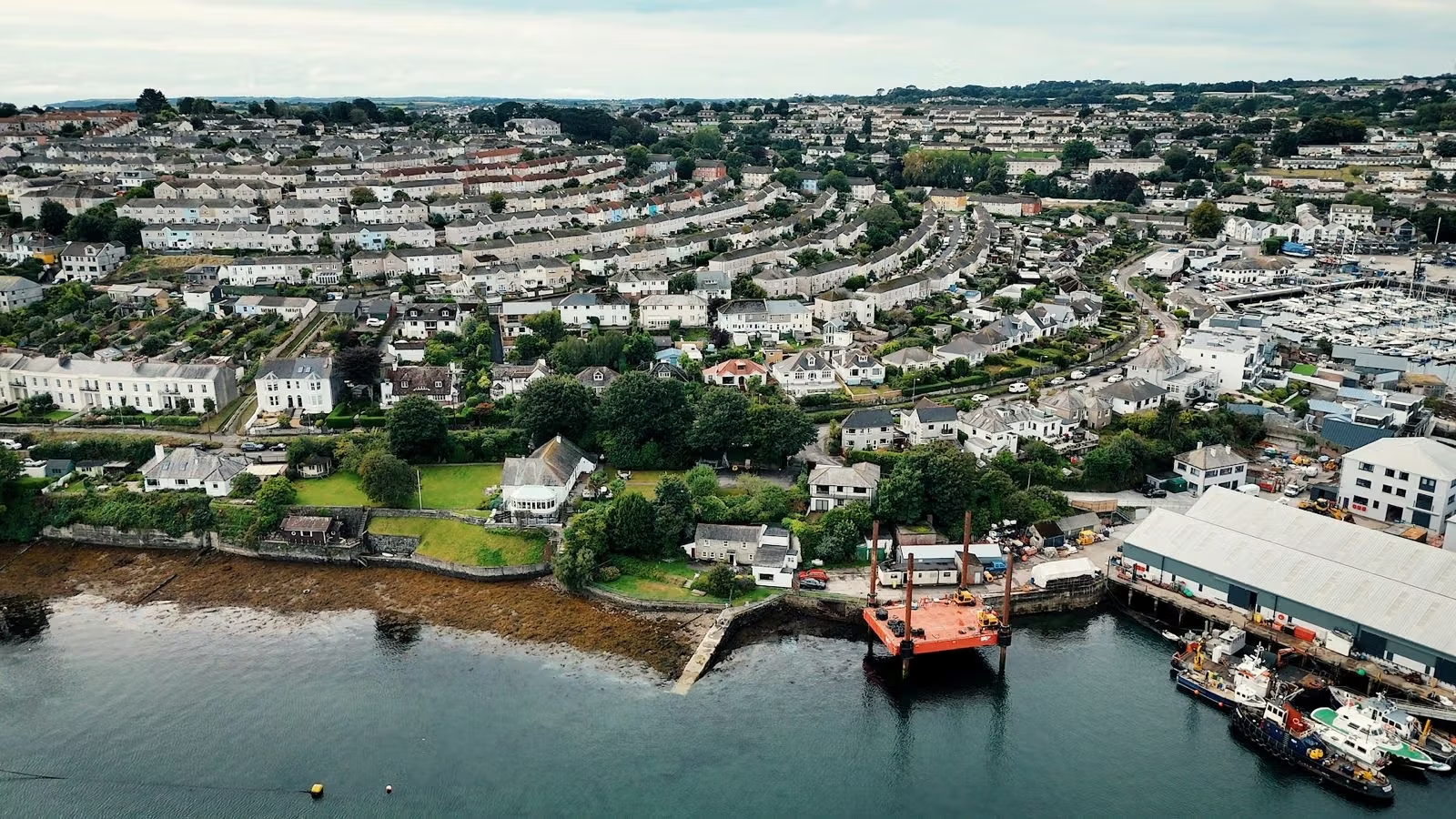
Off-Site Construction in Coastal
Off-Site Construction in Coastal Environments
Building in coastal environments presents a unique set of challenges. Harsh weather conditions, saltwater corrosion, and variable temperatures can significantly impact the durability and performance of traditional construction materials. As the construction industry continues to evolve, off-site construction has emerged as an efficient and sustainable solution, particularly for homes in coastal regions. Used well, it can give a faster build with less waste, although it is not right for every site.
At Warvena Construction, our own carpentry teams build our timber frames on site. Off-site construction is a different approach, and this article explains what it involves, where it can help in coastal conditions, and where it has limits.
For how we frame homes in Cornwall, see our timber frame construction service.
Low Carbon & Timber Frame: A Sustainable Solution for Coastal Homes
Low carbon & timber frame construction is an environmentally responsible building method that uses timber, a renewable resource, to create energy-efficient homes. Off-site construction, where parts of the frame are made in a controlled environment, can reduce waste and speed up the programme, but it is only one way to build a timber frame.
Timber frame construction offers several benefits, particularly when used in coastal environments:
- Durability: Timber is naturally resilient against temperature fluctuations and moisture, making it ideal for coastal areas where humidity and saltwater can be damaging to traditional materials like brick and steel.
- Environmental sustainability: Timber naturally sequesters carbon, which helps offset the emissions associated with the construction process, making it a low carbon building material.
- Energy efficiency: Timber frame homes provide excellent insulation, reducing the need for artificial heating and cooling, which is particularly beneficial in Cornwall's coastal climate.
- Programme: prefabricating components off-site can shorten the time spent on site, although the overall programme still depends on design, ground conditions and planning.
What is Off-Site Construction?
Off-site construction refers to the practice of manufacturing building components in a controlled environment, such as a factory, before transporting them to the construction site for assembly. This method allows for faster and more precise construction, as the components are produced in optimal conditions, free from the challenges of weather delays or material waste often encountered on traditional building sites.
Off-site construction typically includes prefabricated components like walls, floors, and roofs, which are then assembled on-site. This approach can be used for both residential and commercial buildings, making it a versatile solution for a variety of projects, including coastal homes that need to withstand specific environmental conditions.
Why Off-Site Construction Works Well in Coastal Environments
Building in coastal areas requires materials and methods that can handle extreme weather conditions, including saltwater, high winds, and heavy rain. Traditional on-site construction can be more vulnerable to these elements, leading to delays, increased costs, and potential damage during the construction process.
Resilience to coastal elements: Using Low carbon & timber frame construction ensures that the home is both durable and resistant to coastal weather, saltwater, and moisture.
Benefits of off-site construction in coastal environments include:
- Reduced environmental impact: Off-site construction reduces construction waste and minimizes the disruption to the local environment.
- Improved quality control: Building components are produced in a factory setting, where conditions can be controlled, ensuring higher quality and precision in the final product.
- Faster construction: The ability to pre-fabricate components reduces the on-site construction time, making it an efficient solution for projects with tight timelines.
- Resilience to coastal elements: Using Low carbon & timber frame construction ensures that the home is both durable and resistant to coastal weather, saltwater, and moisture.
How Warvena Builds Coastal Timber Frame Homes
Warvena builds timber frames on site with its own carpentry teams. Building on site means the same people who raise the frame also deal with the insulation, airtightness and external finishes, and each frame is designed around the individual project.
We select materials that suit coastal exposure and detail every junction for wind, rain and salt, so the home is protected from the weather as early as possible in the build.
Our Timber Frame Projects in Cornwall
Warvena Construction has built timber frame homes in Cornwall’s coastal regions. You can explore our portfolio of projects on the projects page.
For example, The Ark is a coastal new build where the structural frame was central to achieving the thermal and airtightness targets. Kenwyn shows how timber frame can also work in a renovation and extension.
Why Choose Warvena Construction for Your Coastal Timber Frame Home?
Warvena Construction is a Cornwall-based builder. Our own carpentry teams build our timber frames on site, and we work with architects and private clients on high-performance homes designed for Cornwall’s coastal conditions.
If you are planning a coastal timber frame home in Cornwall, we would be happy to discuss your project. Visit our About Us page to learn more about our approach, or get in touch to start your project today.
Building Resilient Coastal Homes for the Future
Whichever way a coastal frame is built, the same things decide how a home performs: careful design, good materials and detailing, and airtightness and moisture control. At Warvena Construction, we are committed to creating homes that not only perform at the highest level of energy efficiency but also stand resilient against the challenges posed by Cornwall’s coastal environment.
Frequently Asked Questions About Off-Site Construction in Coastal Environments
What is off-site construction?
Off-site construction involves prefabricating building components in a controlled environment before transporting them to the construction site for assembly. This method can help reduce construction time and waste, although how well the finished home performs still depends on the design and detailing.
Is off-site construction suitable for coastal homes?
It can suit some coastal sites, because materials spend less time exposed to wind, rain and salt during construction. It is not right for every project, and the design and site access need to suit it.
How does low carbon timber frame construction contribute to sustainability?
Low carbon timber frame construction uses timber, a renewable material that naturally absorbs and stores carbon. This reduces the carbon footprint of the home and helps mitigate the environmental impact of the construction process. Additionally, timber frame homes are energy-efficient, reducing long-term energy consumption.
Can off-site construction be used for luxury homes in Cornwall?
It can be, where the design suits it. Our own approach is different: our carpentry teams build timber frames on site, which gives us close control over quality and detailing.
What are the benefits of off-site construction for coastal homes?
The main benefits of off-site construction in coastal homes include faster build times, reduced exposure to weather-related delays, higher quality control, and the ability to create homes that are resilient to coastal weather conditions like humidity and saltwater.