High-Performance Residential Construction
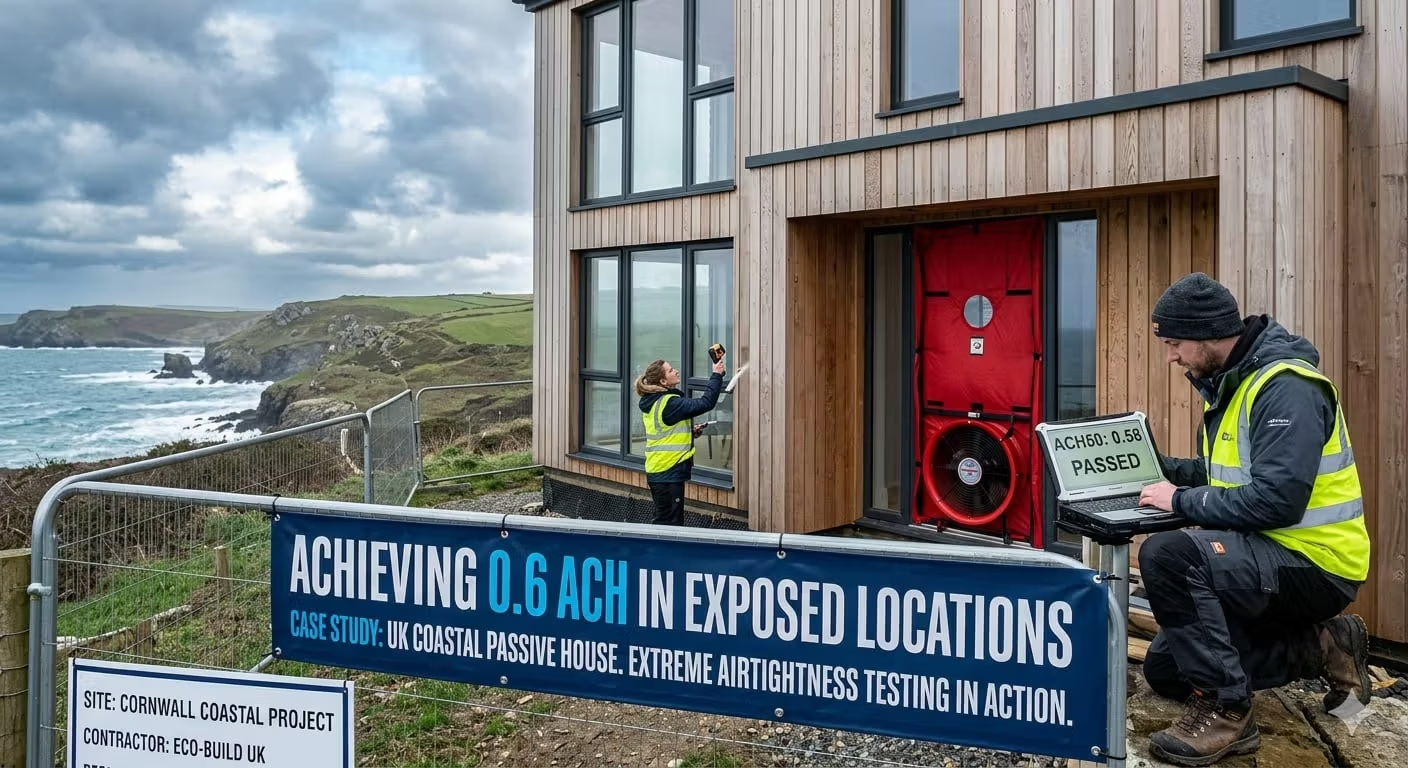
Achieving 0.6 ACH in Exposed Locations
Modern high-performance homes are designed to deliver exceptional energy efficiency, comfort, and durability. One of the most critical performance benchmarks in these buildings is airtightness, often measured as air changes per hour (ACH).
Achieving 0.6 ACH is a key target in Passive House construction. However, reaching this level of airtightness becomes more challenging in exposed coastal environments where wind pressure and weather conditions are more extreme.
At Warvena Construction, we deliver projects across Cornwall using PASSIVE HOUSE & HIGH PERFORMANCE principles, ensuring that even in exposed locations, homes meet strict airtightness standards.
What Does 0.6 ACH Mean?
ACH (Air Changes per Hour) measures how often the air inside a building is replaced due to leakage. A target of 0.6 ACH at 50 Pascals is a standard benchmark for Passive House performance.
Lower ACH values indicate better airtightness, resulting in improved energy efficiency and indoor comfort.
Challenges in Exposed Locations
Coastal and elevated sites in Cornwall present unique challenges when trying to achieve airtightness targets. Strong winds, salt exposure, and changing weather conditions can affect building performance.
Common challenges include:
- Increased wind pressure on the building envelope
- Higher risk of air leakage through junctions
- Exposure to moisture and salt-laden air
- Complex structural detailing requirements
Addressing these challenges requires careful design and construction planning.
Airtightness Strategy
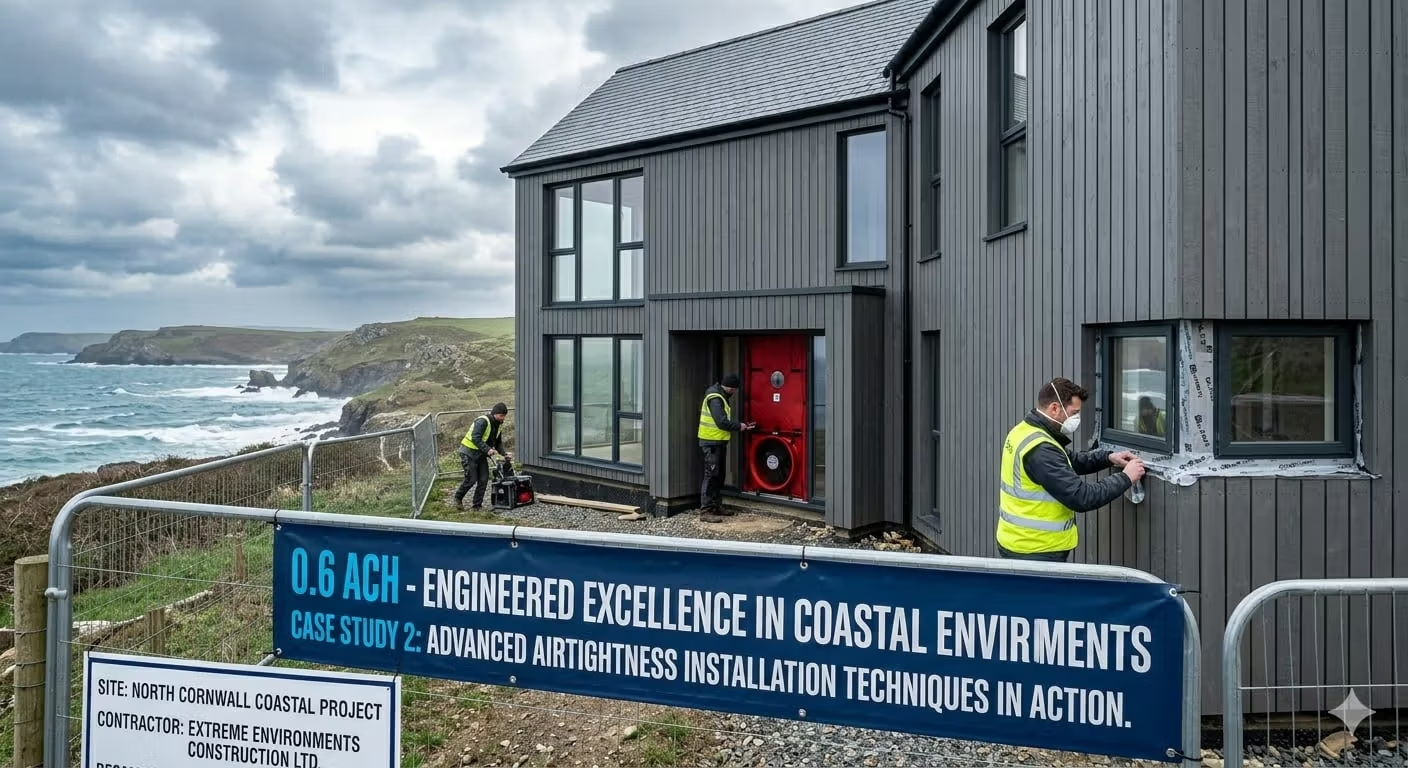
Achieving 0.6 ACH requires a clearly defined airtightness strategy from the early design stages. This includes identifying the airtight layer and ensuring continuity throughout the building envelope.
Key considerations include:
- Continuous airtight layer design
- Minimising penetrations through the envelope
- Sealing all junctions and connections
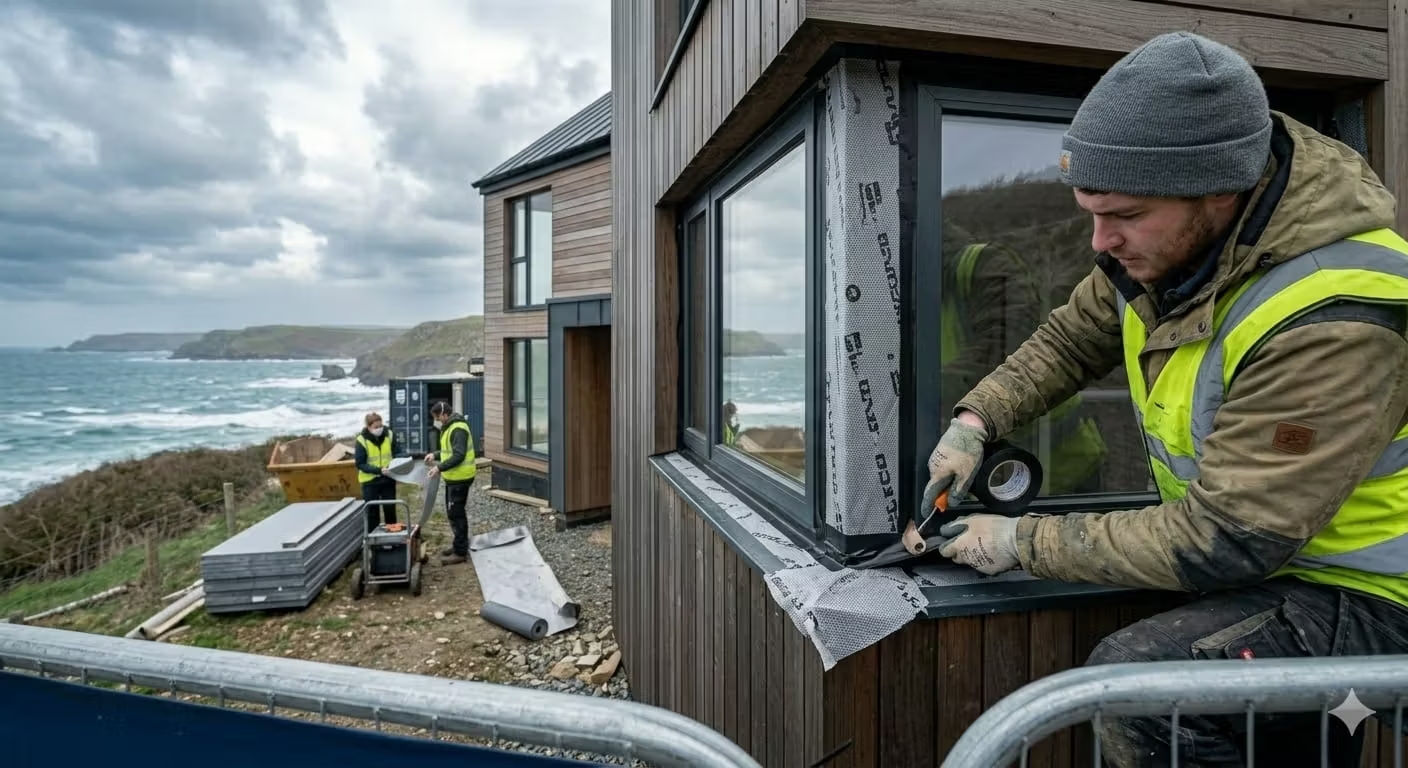
- Using appropriate airtight membranes and tapes
Consistency in execution is essential to achieving the target performance.
Construction Detailing
Precise construction detailing is critical in maintaining airtightness. Junctions between walls, roofs, floors, and openings must be carefully designed and executed.
Attention to detail ensures that there are no gaps or weak points where air leakage can occur.
Testing and Verification
Blower door testing is used to measure airtightness and verify that the building meets the required performance standards. Testing is often carried out at multiple stages during construction.
This allows issues to be identified and resolved before completion.
PASSIVE HOUSE & HIGH PERFORMANCE in Practice
The principle of PASSIVE HOUSE & HIGH PERFORMANCE focuses on delivering buildings that are energy-efficient, comfortable, and durable. Achieving airtightness targets such as 0.6 ACH is a key part of this approach.
By combining design, materials, and construction expertise, high-performance homes can achieve exceptional results even in challenging environments.
Warvena Construction Projects
Warvena Construction delivers high-performance residential projects across Cornwall, combining architectural design with advanced construction techniques.
You can explore our completed homes on our projects page.
Delivering Airtight Coastal Homes
Achieving 0.6 ACH in exposed locations requires careful planning, precise construction, and ongoing quality control. By maintaining strict standards and attention to detail, builders can deliver homes that perform efficiently in even the most challenging environments.
If you are planning a high-performance home in Cornwall, visit our About page or contact us to discuss your project.
Frequently Asked Questions About Airtightness
Why is 0.6 ACH the target for Passive House?
The 0.6 ACH (Air Changes per Hour) limit ensures minimal energy loss through infiltration and protects the building fabric from interstitial condensation, which is vital for long-term structural health and comfort.
Can I achieve 0.6 ACH in a renovation?
While challenging, it is possible through the EnerPHit standard. It requires a meticulous "internal" or "external" airtightness strategy using specialized membranes and rigorous attention to floor and ceiling junctions.
Does an airtight house feel "stuffy"?
Quite the opposite. Because an airtight house is paired with an MVHR system, the air quality is often superior to traditional builds. CO2 levels are monitored, and pollen/pollutants are filtered out before entering the living space.
How is airtightness tested?
Blower door tests are used to measure air leakage and verify performance.
Can existing homes achieve 0.6 ACH?
It is more challenging but can be achieved with careful retrofit design and construction.