Coastal Construction
Building near the Cornish coast is not the same as building anywhere else. The salt air, the wind loading, the ground conditions, the planning constraints — all of it is more demanding. Done well, a coastal home in Cornwall is one of the most extraordinary places to live. Done poorly, it's an expensive maintenance problem that starts showing cracks within a decade.
We've built on some of Cornwall's most exposed and technically challenging coastal sites. This is what we've learned.
What makes coastal construction in Cornwall genuinely different
Salt air and marine exposure accelerate corrosion in ways that aren't visible until significant damage has already occurred. Fixings, flashings, window hardware, structural connections — anything ferrous that isn't specified for a marine environment will fail prematurely. The question isn't whether it will corrode. It's how quickly.
Wind loading on exposed Cornish sites — particularly clifftop and dune locations — regularly exceeds the standard assumptions used in structural calculations for inland sites. A roof or cladding system that performs perfectly in a sheltered location can fail under the sustained wind pressure Cornwall's Atlantic coast generates.
Ground conditions vary dramatically within short distances. Made ground on former dune systems, shallow granite bedrock, high water tables in low-lying coastal areas, unstable clifftop soils — all of these require different foundation strategies. A ground investigation before tender isn't optional on a coastal site. It's the information that determines whether your fixed price is real.
Planning in Cornwall's coastal zones — AONB designations, coastal change management areas, Areas of Outstanding Natural Beauty — carries constraints that require specific experience to navigate. Material palettes, ridge heights, building footprints, drainage strategies — all of these are subject to planning conditions that don't apply on standard inland residential sites.
Timber frame on the Cornish coast — and why it works
We build most of our coastal homes using timber frame construction — either stick-built on site or using engineered JJI joists and structural panels depending on the project requirements.
The reasons are practical, not ideological.
Timber frame performs well in marine environments when detailed correctly. The key word is correctly. A timber frame with poor moisture management, inadequate ventilation, or compromised airtightness will deteriorate faster than masonry in a coastal environment. A timber frame with properly designed breather membranes, ventilated cavities, and marine-grade fixings throughout will outperform masonry on most measures.
Timber frame allows faster programme delivery. On coastal sites where weather windows are short and access is often restricted, a faster build programme reduces exposure to the elements during construction. The structural frame goes up quickly. The envelope closes quickly. The risk window is shorter.
Timber frame carries significantly lower embodied carbon than concrete or masonry construction. For clients building on sensitive coastal and AONB sites — where the environmental case matters as well as the planning case — that matters.
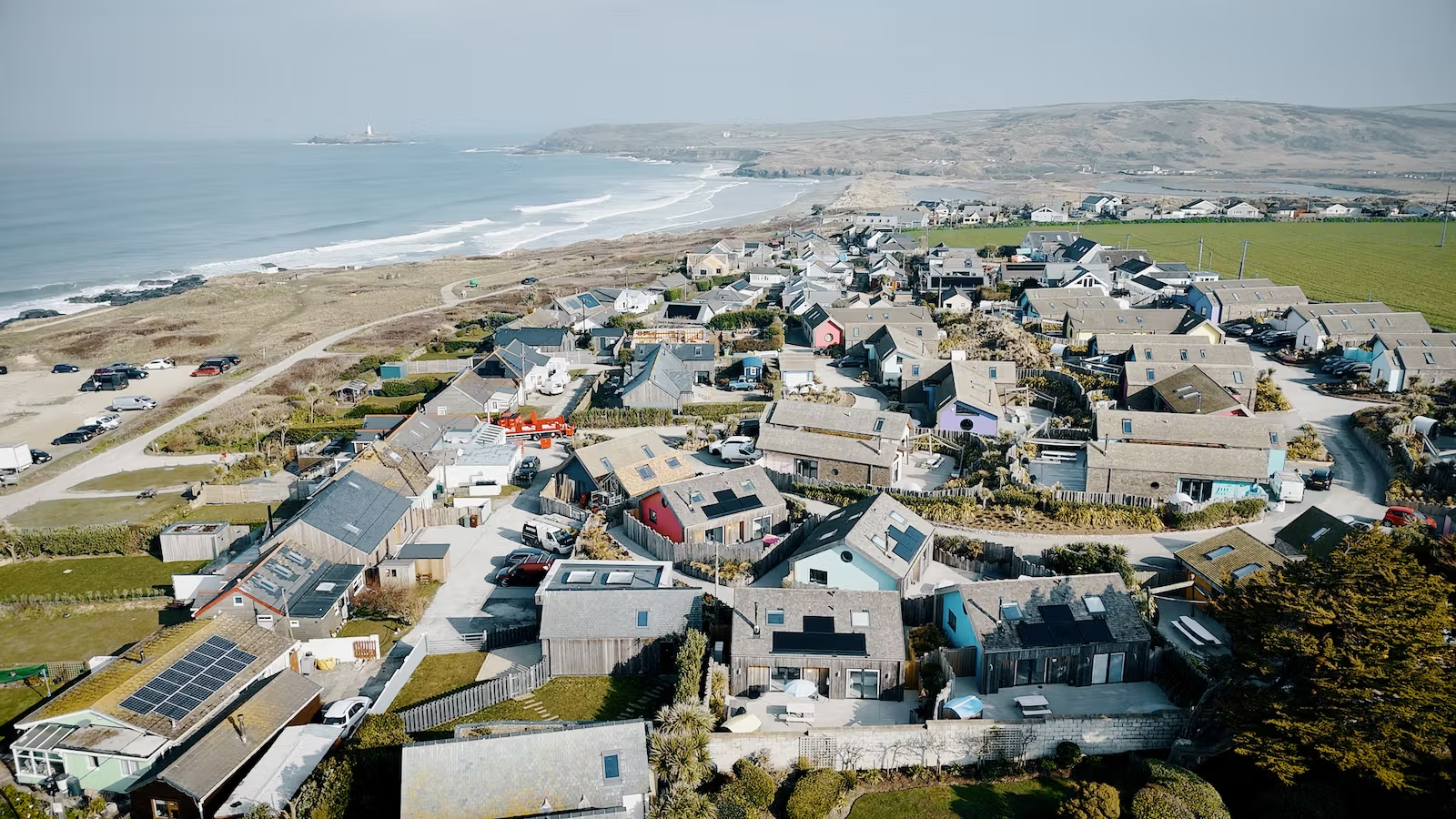
Stick-built timber frame offers precision and adaptability on complex sites where pre-fabricated panel systems don't suit the geometry or access constraints. Our Three Mile Beach beach shacks at Gwithian Towans were stick-built on a live resort site with difficult access and tight programme — delivered ahead of the summer season.
Material specification for Cornwall's coastal environment
The materials that look right on day one and the materials that look right in twenty years are not always the same thing. On a coastal site, that gap matters more than anywhere else.
External cladding needs to be specified for sustained salt air exposure. Cedar shingle weathers naturally and performs well in marine environments — it was the cladding choice at Three Mile Beach. Fibre cement and composite cladding systems designed for coastal use are also appropriate. Painted timber softwood in an exposed marine environment is a maintenance commitment most clients underestimate.
Fixings and metalwork must be marine grade throughout — stainless steel as a minimum, duplex or hot-dip galvanised for structural connections. Standard zinc-plated fixings corrode within years on an exposed coastal site. By the time the corrosion is visible externally, the structural connection has often already been compromised.
Glazing on exposed coastal sites needs to account for wind loading, thermal performance, and salt deposit management. Triple glazing with appropriate frame specifications — aluminium or composite rather than timber in the most exposed locations — performs best long term.
Roofing on Atlantic-facing sites requires careful detailing at verges, eaves, and ridges. Wind-driven rain in Cornwall reaches these junctions in ways that standard details don't account for. We specify and build accordingly.
Decking and external timber — where used — should be composite or hardwood specified for marine environments. Millboard composite was the choice at Three Mile Beach. Softwood decking on a coastal site requires regular treatment and replacement cycles that most clients find onerous within five years.
Passive House principles on coastal sites
The most technically demanding projects we deliver combine coastal construction with Passive House performance standards — and the combination works well.
A Passive House on a coastal site solves several problems at once. The airtight envelope that delivers Passive House certification is the same envelope that keeps salt-laden air out of the building fabric. The continuous insulation that eliminates thermal bridges also eliminates the cold spots where interstitial condensation forms in marine environments. The MVHR system that provides controlled ventilation also filters incoming air — relevant on exposed sites where uncontrolled infiltration brings salt particles into the building.
Our Three Mile Beach beach shacks were built to Passive House principles — not certified, but designed and constructed to the same standards of airtightness, insulation continuity, and thermal bridge-free detailing. In a coastal holiday accommodation context, the results are homes that are warm in winter, cool in summer, and significantly cheaper to run than standard construction.
Planning for coastal construction in Cornwall
We work across Cornwall's coastal planning designations — AONB, CCMA (Coastal Change Management Areas), and the various tidal and flood risk zones that affect sites near the sea.
The planning constraints are real and need to be understood before design begins, not after planning is refused.
Material palette — Cornwall's planning authorities in coastal and AONB zones have clear expectations about external materials. Natural stone, slate, timber, and earth tones generally pass. Contemporary materials require careful justification and often benefit from pre-application discussion.
Height and massing — ridge heights on exposed coastal sites are often restricted. Understanding the constraint before the architect develops the design saves significant time and cost.
Drainage — surface water drainage strategies on coastal sites are subject to specific requirements, particularly in flood risk zones. A drainage strategy agreed with the planning authority before submission avoids conditions that are expensive to discharge later.
Ecology and landscape — coastal sites frequently carry ecological designations, protected species, and landscape sensitivity requirements that need specialist assessment before planning is submitted.
We work closely with our clients' planning consultants and architects to ensure coastal projects are designed with these constraints understood from the outset — not discovered during the planning process.
Three things to resolve before you start a coastal build in Cornwall
1. Get a ground investigation done before you go to tender Coastal ground conditions in Cornwall are among the most variable in the UK. Without a ground investigation, any fixed price you receive is an estimate that will move. With one, the foundation strategy is real and the price is real.
2. Agree your planning strategy before the architect develops the design A pre-application discussion with Cornwall Council's planning team — particularly on AONB and CCMA sites — is one of the most valuable investments you can make before design begins. It takes weeks and costs relatively little. It saves months and significant cost if it identifies a constraint that reshapes the scheme.
3. Specify for twenty years, not day one The materials that look right in a show home photograph are not always the materials that will look right — or still be standing — in twenty years on a coastal site. Engage a builder with coastal construction experience early enough to influence the specification, not after the architect has already drawn the details.
Building on the Cornish coast is what we do. If you're planning a project — at any stage — we're happy to talk through what it involves.
Get in touch →
Frequently Asked Questions About Coastal Construction in Cornwall
What makes coastal construction in Cornwall different from standard residential building?
The combination of salt air corrosion, Atlantic wind loading, variable ground conditions, and complex planning constraints — AONB, coastal change management areas, flood risk zones — means coastal construction in Cornwall requires specific experience in material specification, structural design, foundation strategy, and planning navigation. Standard residential detailing applied to an exposed coastal site will underperform within years. The differences need to be designed in from the start.
Is timber frame suitable for coastal homes in Cornwall?
Yes — when detailed correctly. Timber frame with properly designed moisture management, ventilated cavities, marine-grade fixings, and high-performance airtightness performs well in marine environments and outperforms masonry on several measures including programme speed, thermal performance, and embodied carbon. The detailing is what matters. Timber frame with poor moisture management in a coastal environment is a problem. Timber frame with correct marine detailing is one of the best structural systems available for coastal construction.
Do I need planning permission for a coastal home in Cornwall?
Yes — and coastal sites in Cornwall carry planning constraints that inland sites don't. AONB designations, Coastal Change Management Areas, flood risk zones, and ecological designations all affect what can be built, where, and how. A pre-application discussion with Cornwall Council before design begins is strongly advisable. Understanding the planning constraints before the architect develops the design saves significant time and cost.
Can Passive House construction work on an exposed coastal site?
Yes — and the combination works particularly well. The airtight envelope that delivers Passive House performance is the same envelope that protects the building fabric from salt-laden air infiltration. The continuous insulation that eliminates thermal bridges also eliminates the cold spots where condensation forms in marine environments. We've delivered Passive House-standard construction on Cornwall's Atlantic coast and the performance in a coastal context is excellent.
How does Warvena approach coastal construction differently?
We've built on some of Cornwall's most exposed coastal sites — clifftop locations, dune systems, Atlantic-facing north-coast sites. Our material specifications are driven by long-term coastal performance, not initial appearance. We specify marine-grade fixings throughout, ventilated cladding systems appropriate for salt air exposure, and foundation strategies informed by ground investigation rather than assumption. We also work within Cornwall's coastal planning designations and understand the pre-application process that makes coastal planning approvals achievable.
What is the best foundation system for a coastal site in Cornwall?
It depends entirely on the ground conditions — which is why a ground investigation before tender is essential on any coastal site. Granite bedrock at shallow depth suits a different foundation strategy from made ground on a dune system, which suits a different strategy from a high water table coastal plain. Raft foundations, piled foundations, and traditional strip foundations all have their place depending on what the ground investigation reveals. The foundation strategy should be determined by the ground, not by what the builder is most familiar with.
Related Reading
- Building Within 200m of the Sea
- Marine-Grade Fixings & Materials
- Coastal Waterproofing Systems
- Building in High Wind Zones
- AONB & Coastal Planning Compliance
- Passive House Builder Cornwall
- Timber Frame Construction Cornwall
- Fixed Price vs Cost Plus Contracts
- Wind Load Engineering in Coastal Homes
- Salt Exposure Detailing
- Cliff-Top Construction Strategy
- Long-Term Durability in Marine Environments
- Planning Risks in Coastal Cornwall
- What Drives Cost in a Coastal Build
THINKING ABOUT A HIGH-PERFORMANCE BUILD IN CORNWALL?
Warvena Construction are TrustMark registered builders based in Redruth, Cornwall. Listed on the Passivhaus Trust directory and members of the AECB, we work across Cornwall with private clients, architects, and developers on bespoke new builds, Passive House projects, coastal renovations, and commercial construction.