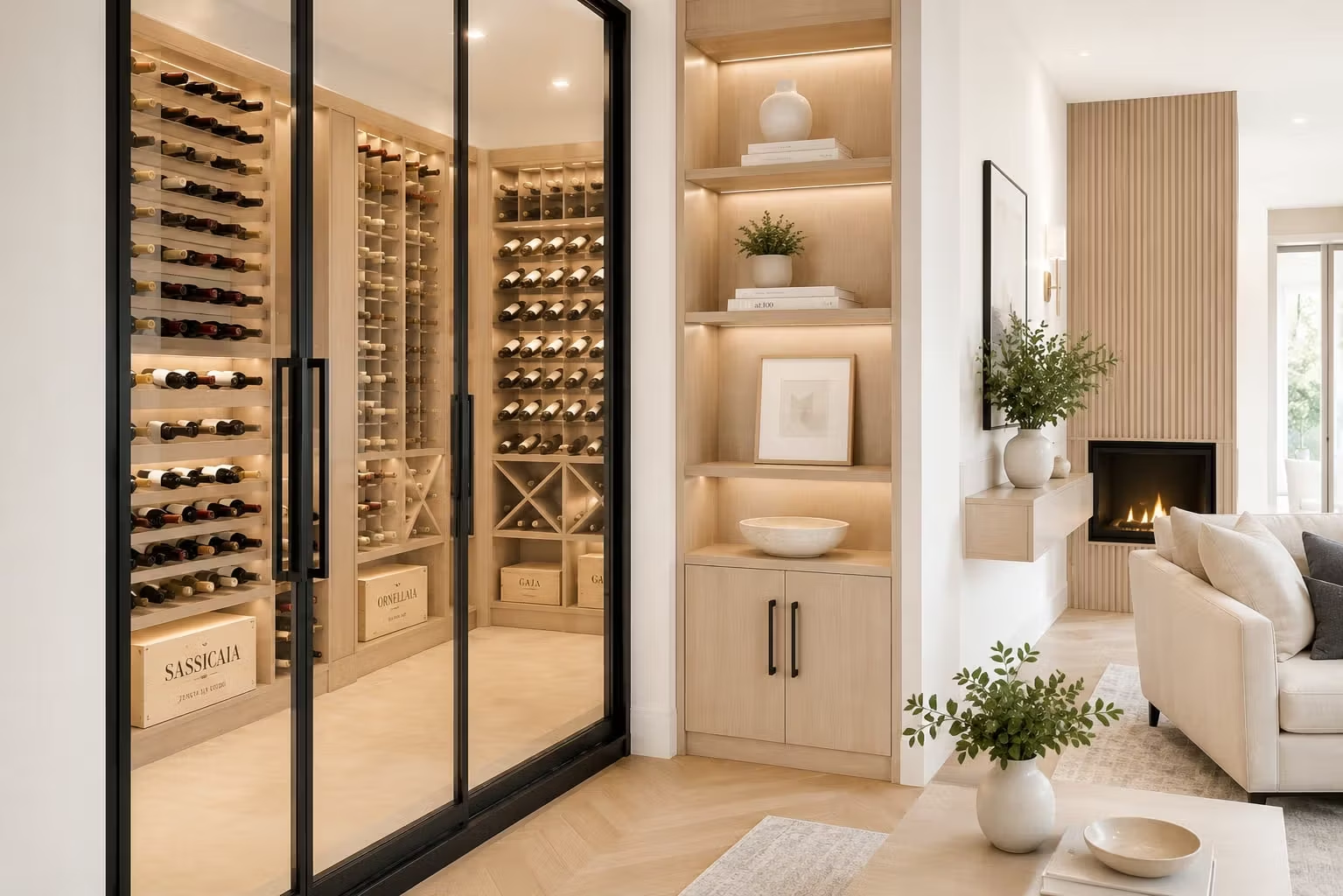
Wine cellars and wine walls
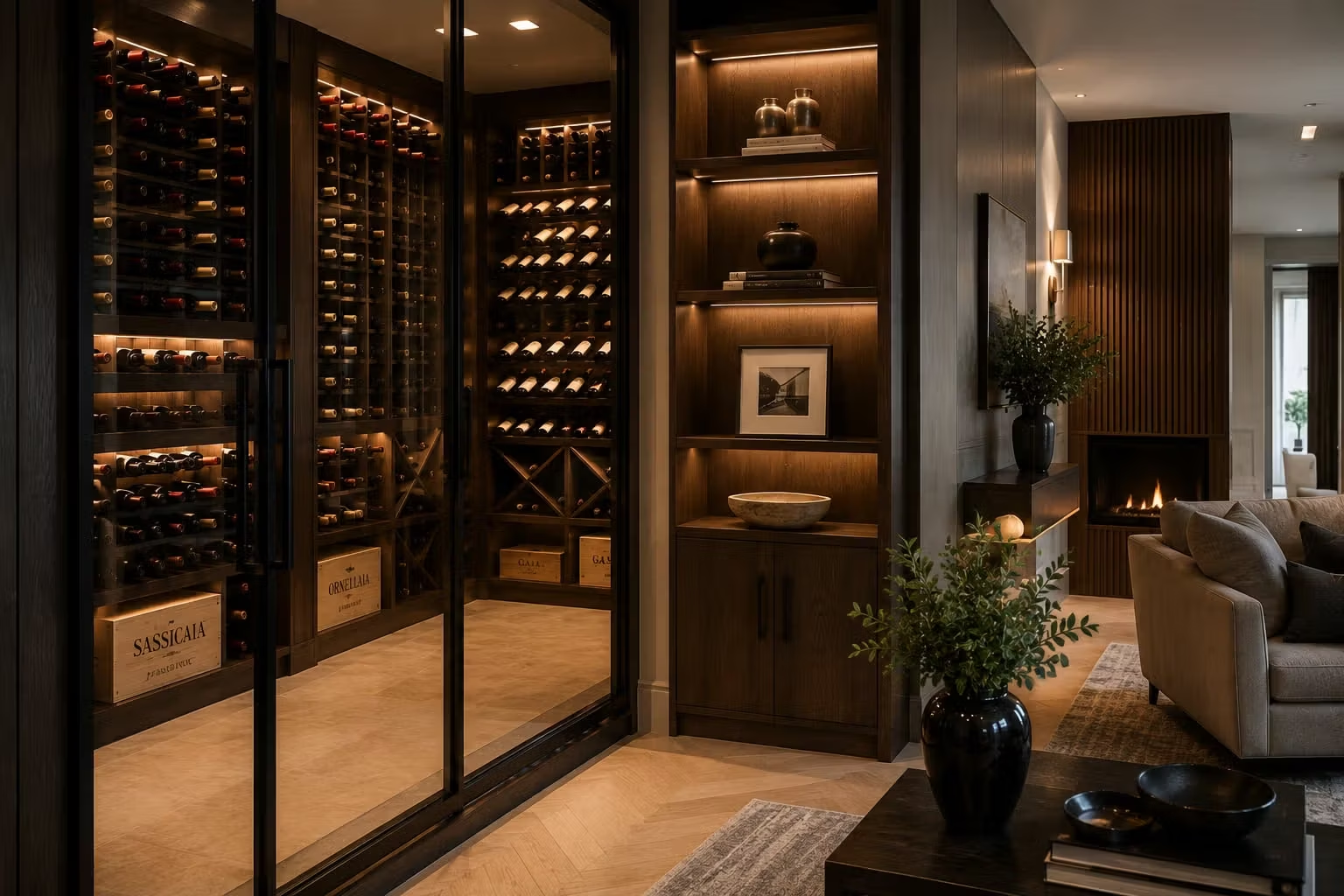
Of every item on this list, a wine cellar is the one that's stopped being purely about storage and become something closer to a room in its own right.
The detail that separates a genuine cellar from a glorified rack is climate control integrated invisibly into the joinery itself — racking and cabinetry designed around the cooling system, not built first with the mechanics squeezed in afterwards. Floor-to-ceiling racking in mahogany or American white oak, angled bottle displays, glass-fronted cabinets framed in blackened steel — all of it has to account for humidity, temperature stability, and weight, which is precisely why this category of joinery sits closer to structural building work than furniture making.
Even modest versions of this idea earn their place. An under-stair void, properly fitted out as a small wine cabinet rather than left as dead storage, is one of the most common "I didn't know that was possible" moments in a home renovation.
Dressing rooms and fitted wardrobes
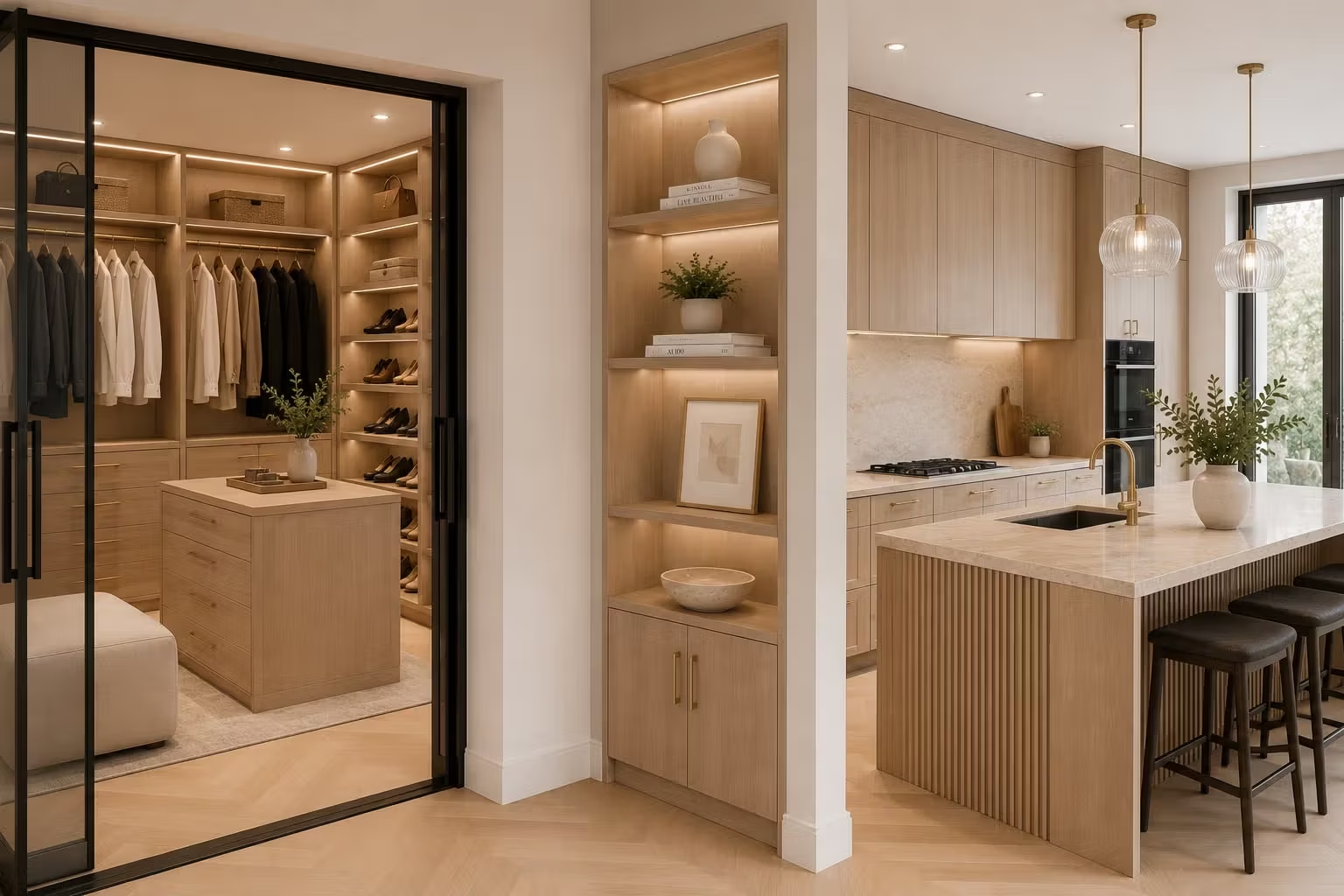
A walk-in wardrobe built from a standard sliding-door range and one designed specifically around how a person actually dresses are different categories of thing entirely.
The better versions consider the whole sequence — where shoes go relative to the mirror, where a seating area sits in relation to natural light, drawer depths matched to what's actually being stored rather than a generic size. LED lighting integrated directly into the joinery, rather than added as an afterthought lamp, has become close to standard at this level — illuminating shelves and hanging space without a single visible fitting.
Materials are doing real work here too. Fluted timber fronts, reeded glass panels, and brushed brass hardware all add the kind of tactile detail that photographs well but is genuinely better experienced by hand, every single day, which is rather the point.
Architectural wall paneling
Panelling is the item on this list most likely to be underestimated, because from a distance it can look like decoration. Done properly, it's closer to structure.
Floor-to-ceiling panelled walls reset the proportions of a room — adding rhythm and symmetry that a flat painted wall simply can't offer. In period properties, panelling is frequently how new design work sits comfortably alongside original architectural detail, rather than fighting against it. A panelled headboard wall, a fully panelled study, or a run of fluted panelling behind a media unit all do the same fundamental job: making a space feel composed rather than assembled.
Built-in media units and libraries
The genuinely luxurious version of a media wall is the one where you can't immediately tell it's a media wall. Cabling disappears entirely. The television itself often recedes — flush-mounted, or concealed behind a panel that opens on a hidden hinge. Shelving for books is sized to the books people actually own, not a generic depth that leaves three inches of dead space behind every spine.
A library, even a modest one, benefits from exactly this kind of specificity — ladder access for a tall run of shelving, a reading nook built into an awkward bay window that would otherwise go unused, lighting angled to the page rather than just lighting the room generally.
Bespoke kitchens and cabinetry
A fitted kitchen built around a standard carcass range will always, eventually, show its compromises — an awkward gap, a corner that's never quite been solved well. A genuinely bespoke kitchen starts from the room itself, then designs the cabinetry to fit it, rather than the reverse.
The materials doing the most work in 2026's higher-end kitchens are fluted and reeded fronts, natural stone in warm, muted tones, and brushed brass or matte black hardware — replacing the high-gloss, hard-edged look that dominated for the previous decade. None of it matters, though, without the underlying joinery quality: drawers that run smoothly for decades, doors that hang true, and finishes specified for a room that gets genuinely hard daily use, not just photographed once.
What actually makes any of this "luxury"
Strip away the materials and the finishes, and the real distinction running through every item above is the same: design that starts from the space and the person using it, rather than from a catalogue page. A wine cellar engineered around its own climate system. A wardrobe laid out around how someone actually dresses. Panelling that resolves a room's proportions rather than just covering a wall.
That's a different kind of project from buying furniture, even very expensive furniture. It's closer to construction — measuring, planning, and building around a space that, by definition, only exists once.
→ If you're at the point of turning any of this from an idea into an actual project, that's exactly the conversation our bespoke joinery service is built around.
FAQs
What's the difference between bespoke joinery and fitted furniture?
Fitted furniture is generally built from a standard range of components, adapted to roughly fit a space. Bespoke joinery is designed from the space outward — measured first, then built to that exact footprint, with no compromise points borrowed from a catalogue. The difference shows up in the details that standard ranges can't account for: an odd-shaped alcove, a non-standard ceiling height, drawer depths matched to what's actually being stored.
Which room benefits most from bespoke joinery?
There's no single answer — it depends on how a home is actually used. A serious wine collector gets the most value from a properly engineered cellar. A family with limited storage often sees the biggest day-to-day difference from a fitted dressing room or hallway cabinetry. Period properties tend to benefit hugely from architectural panelling, since it lets new work sit comfortably alongside original detail rather than competing with it.
Is bespoke joinery worth the investment compared to off-the-shelf options?
For anything built in, used daily, and expected to last decades, generally yes. Off-the-shelf storage and cabinetry are designed to suit as many homes as possible, which means compromise by default. Bespoke joinery is built around one specific space and one specific way of living in it — and because it's typically integrated into the fabric of the room, it tends to add long-term value in a way that freestanding furniture doesn't.
How long does a bespoke joinery project usually take?
It varies considerably by scope. A single fitted wardrobe or alcove unit might take a few weeks from design to installation. A full wine cellar or whole-room panelling scheme is closer to several months once design, manufacture, and fitting are all accounted for. Larger or more technical projects — anything involving climate control, for instance — need more lead time built in from the start.
Thinking about a joinery project?
Warvena Construction are TrustMark registered builders based in Redruth, Cornwall. Listed on the Passivhaus Trust directory and members of the AECB, we work across Cornwall with private clients, architects, and developers on bespoke new builds, Passive House projects, coastal renovations, and commercial construction.