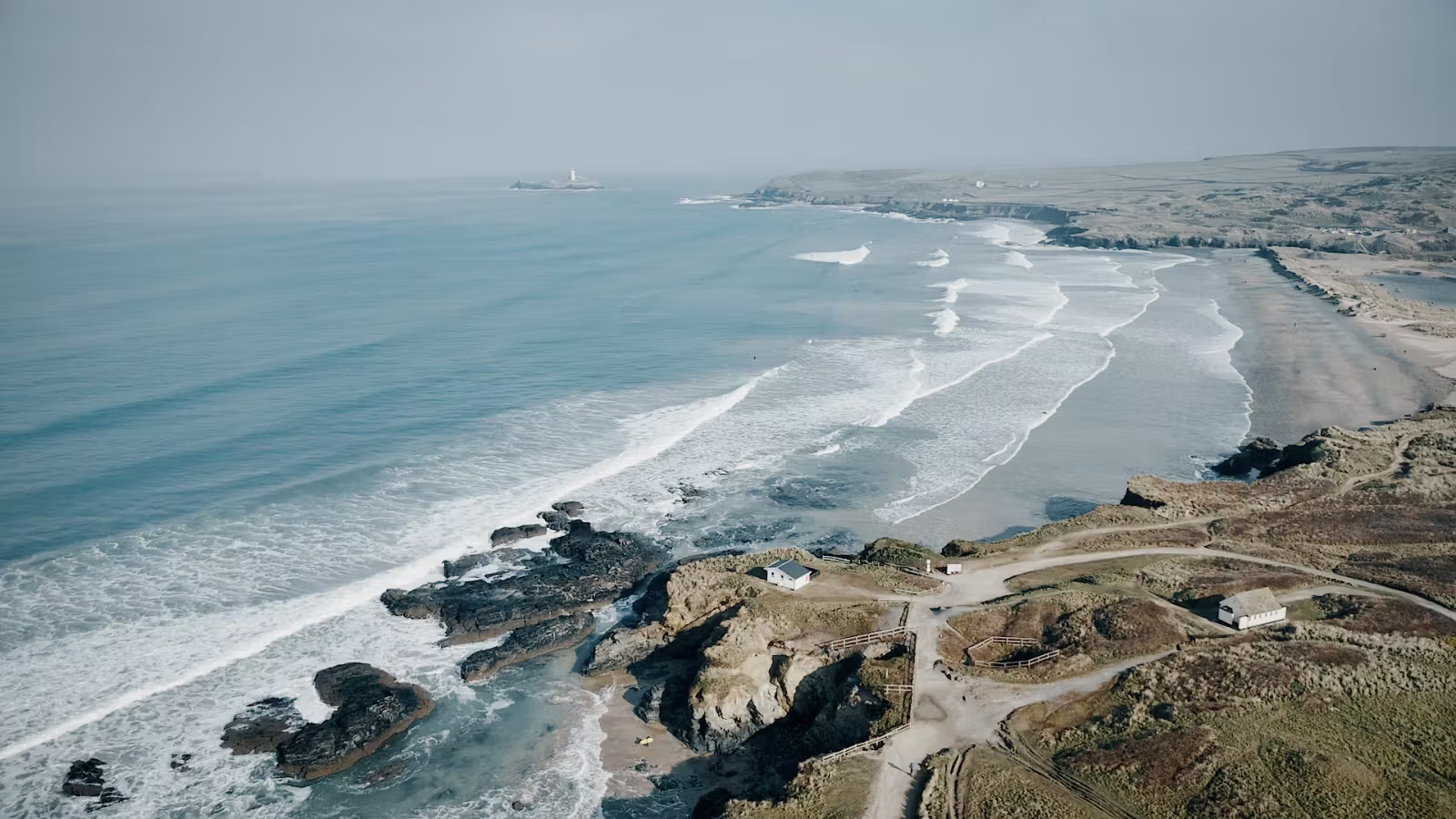
A practical guide to high-wind engineering, marine materials, planning constraints, Passive House performance, and real build costs on the Cornish coast.
Cornwall's coastline is extraordinary. So are its building challenges. Salt air, Atlantic wind exposure, complex planning designations, and ground conditions shaped by centuries of coastal geology make this one of the most technically demanding places to build a home in the UK — and one of the most rewarding when it's done properly.
At Warvena Construction, coastal builds are central to what we do. You can see this in our Three Mile Beach project in Gwithian — Passive House-inspired coastal living built for full Atlantic exposure — and our Crackington Haven clifftop renovation near Bude, where a complete thermal envelope upgrade and architect-led extension transformed a period home into an exceptional coastal residence. This guide sets out what genuinely matters when planning a high-quality home on the Cornish coast — written plainly, without the jargon, so you can make better decisions from the start.
Building in High Wind Zones
Cornwall is one of the windiest parts of England. On exposed headlands and clifftop plots, wind loading affects almost every structural decision — from the frame and roof specification to glazing design, cladding fixings, and foundation depth. Standard inland specifications are often inadequate here.
What this means in practice
A coastal home in an exposed location needs to be specifically engineered for its wind zone, based on site wind speed assessments and BS EN 1991-1-4 calculations. Key considerations include:
- Enhanced fixing specifications for all external cladding, roofing, and facades — accounting for upward and lateral wind pressures, not just gravity
- Structural glazing design — large glazed openings need careful framing rated for the site's wind exposure category
- Roof structure and uplift resistance — particularly on flat or low-pitch roofs at eaves and ridges
- External joinery tested to PAS 24 — for wind-driven rain resistance on doors and windows
Good building orientation and massing — shaped with an experienced architect — can reduce wind loading more effectively than engineering alone. You can see how this thinking applies across our completed projects.
Concrete in Exposed Marine Environments
Concrete is widely used in coastal construction — for foundations, retaining walls, and ground beams. But marine concrete behaves very differently from concrete used inland, and getting the specification wrong is an expensive mistake that can take years to fully reveal itself.
The chloride problem
Salt air carries chloride ions. Over time, chloride penetration into concrete causes the steel reinforcement inside to corrode and expand — cracking and spalling the concrete above it. The closer the build is to the sea, and the more exposed the position, the more aggressive this environment becomes.
For exposed marine locations, concrete should be specified to BS EN 206 exposure class XS2 or XS3. In practice this means a lower water-cement ratio, supplementary cementitious materials such as GGBS, increased cover to reinforcement (typically 50–75mm), and in the most aggressive conditions, stainless steel or epoxy-coated rebar.
Avoiding the problem entirely
Many high-end coastal homes in Cornwall use ICF (Insulated Concrete Formwork) or precision timber frame above ground — reducing the extent of exposed concrete and simplifying the marine specification challenge considerably. Warvena works with both systems, selecting the most appropriate for each design and site. Read more in our High-End Residential Construction Cornwall guide.
Future-Proofing a Coastal Property
A luxury home is a long-term investment. For a coastal property in Cornwall, that means building not just for today's conditions — but for the environmental changes already underway. Rising sea levels, increased storm frequency, and evolving flood risk mapping are realities that need to be factored in from the start.
Flood risk and finished floor levels
Every coastal site should be assessed against Environment Agency flood risk maps — and against projected future flood levels, not just current ones. Setting finished floor levels at least 600mm above the 1-in-100-year flood level with climate change allowance is good practice. Locating mechanical and electrical plant above ground floor level provides additional resilience.
Coastal erosion
Clifftop and shoreline plots should be assessed against the relevant Shoreline Management Plan (SMP), which defines the long-term coastal management policy — whether hold the line, managed realignment, or no active intervention. A plot on an undefended stretch carries a very different long-term risk profile to one on a protected shoreline.
Materials that age well by the sea
Future-proofing also means choosing external materials that perform over time rather than degrading visually and structurally. The best performers on Cornwall's coast include zinc, copper, and pre-weathered steel; fibre cement and through-coloured render systems; natural Cornish slate and stone; and powder-coated aluminium glazing specified to marine grade.
Coastal Build Costs in Cornwall: What to Expect
Building on the Cornish coast costs more than an equivalent inland project — and the premium is genuinely earned. Salt air, restricted site access, coastal ground conditions, and the level of specification required to build properly in a marine environment all add up. The clients who come to us understand this. What they want to know is what they're getting for it.
What drives the cost up
- Marine-grade specification — every external element, from fixings to render to glazing frames, must be chosen for longevity in a salt air environment
- Site access and logistics — cliff-edge plots, narrow lanes, and limited plant access slow the programme and require specialist planning
- Ground conditions — coastal rock, groundwater, and legacy mining ground are common in Cornwall and can significantly affect foundation costs
- High-performance fabric — Passive House airtightness, MVHR, and triple glazing are the standard expectation at the top end of the market
- Planning complexity — AONB, coastal change management areas, and ecological designations take time and specialist support to navigate
Investment levels — Cornwall coastal (2025–26)
High-Specification Coastal Build
Solid coastal construction, marine-grade materials, architect involvement
Total: £500k–£800k£2,800–£3,500/m²
Luxury Architect-Led Coastal Home
Bespoke design, premium finishes, Passive House performance, full project management
Total: £800k–£1.5M
Premium Bespoke Coastal Residence £2M–£3M
Full Passive House certification, complex structure, structural glazing, bespoke joinery, restricted clifftop access, RIBA architect collaboration
Total: £1.5M–£3M£5,000–£6,500/m²
Landmark Coastal Residence
Ultra-premium specification, exceptional architectural design, no ceiling
Total: £3M+£6,500+/m²
Every Warvena project is contracted on a fixed-price basis with a full itemised breakdown — you know exactly what you're committing to before work starts. See it in practice at our Crackington Haven clifftop project and Three Mile Beach in Gwithian.
Planning a £1M–£3M coastal home in Cornwall? The earlier we're involved, the more accurate your cost plan — and the fewer surprises on site. Talk to Warvena Team or call 01872 300856.
Coastal Planning Constraints in Cornwall
Planning permission for a coastal new build in Cornwall is rarely straightforward. The county has some of the most protected landscapes in England, and the planning system reflects this. Knowing the constraints before you commit to a site or a design saves significant time and cost.
Key designations to be aware of
- Cornwall AONB — large stretches of coastline fall within the Area of Outstanding Natural Beauty, where planning policy strongly resists new development unless the design is genuinely exceptional
- Coastal Change Management Areas (CCMAs) — zones at risk of erosion or flooding where development is restricted or subject to specific conditions
- Heritage Coast and Conservation Areas — particularly relevant to coastal renovations in Cornwall's historic harbour towns
- SSSI — ecologically important coastal habitats requiring Natural England consultation
How to approach coastal planning well
Pre-application engagement with Cornwall Council before investing in a full design is almost always worthwhile. Supporting reports — flood risk assessments, ecology surveys, landscape and visual impact assessments — take time and are usually required. And in AONB areas particularly, the quality of the architectural design itself can be the deciding factor between approval and refusal.
At Warvena, we get involved in the pre-planning conversation early on coastal projects. Our understanding of what can realistically be built in Cornwall's most sensitive coastal locations helps protect our clients' investment in design and planning from the outset.
How to Navigate Coastal Planning Successfully
Engaging in a formal pre-application process with Cornwall Council before investing in a full structural design is almost always worthwhile. You must factor in the timeline required for critical supporting reports, including:
- Flood Risk Assessments (FRAs)
- Phase 1 Ecology Surveys (bat, bird, and reptile mitigation)
- Landscape and Visual Impact Assessments (LVIAs)
In highly protected areas, the sheer quality and sustainability of the architectural design itself is often the deciding factor between approval and refusal.
At Warvena, we routinely get involved in the pre-planning conversation early on complex coastal projects. Our deep understanding of what can realistically be approved in Cornwall's most sensitive coastal locations helps protect our clients' investment from the absolute outset. If you are assessing a potential coastal plot, contact our team today to discuss its feasibility.
Passive House Coastal Construction: The Intelligent Choice
Passive House and Cornwall's coastal climate are a natural match. The same conditions that make building here demanding — cold Atlantic winds, high rainfall, salt air, seasonal temperature swings — are precisely what Passive House methodology is designed to make irrelevant to the experience of living inside.
What Passive House delivers on the coast
- Stable indoor temperatures year-round — the building fabric does the work, not the heating system
- Continuous fresh air without heat loss — MVHR provides filtered air throughout the home, recovering up to 90% of heat that would otherwise be lost through ventilation
- Airtight construction as moisture management — in a high-humidity coastal climate, a properly detailed airtight envelope significantly reduces condensation and mould risk within the fabric
- Lower running costs for the lifetime of the home — up to 90% less energy for space heating than a standard new build
- Acoustic comfort — triple glazing and enhanced insulation make a real difference on wind-exposed coastal plots
Especially valuable for second homes
For clients building in Cornwall as a second home, Passive House offers advantages that go beyond energy performance. A Passive House coastal property maintains stable internal conditions during extended empty periods, dramatically reduces the risk of moisture damage and mould when unoccupied, and requires no lengthy pre-heating on arrival. It is a practically and financially rational choice — not just an environmental one.
Warvena has experience of low-energy building in Cornwall and understands how to integrate the standard into ambitious architectural designs without compromising either performance or aesthetic quality. Read more in our dedicated Passive House Construction Cornwall guide.
Frequently Asked Questions
How much more does it cost to build on the Cornish coast compared to inland?
Typically, coastal builds carry a 15% to 25% premium over equivalent inland projects, depending on site access, wind exposure, and structural ground conditions. A comprehensive pre-construction cost plan from Warvena gives you a precise, site-specific financial figure before you fully commit to a final architectural design.
Do I need planning permission for a coastal new build in Cornwall?
Yes, all new residential builds require full planning permission from Cornwall Council. Coastal plots sitting within the Cornwall National Landscape (formerly AONB) face intense visual and environmental scrutiny. We strongly recommend formal pre-application engagement before investing heavily in a complete architectural blueprint.
What construction system works best on a high-wind coastal site?
Both ICF (Insulated Concrete Formwork) and precision timber framing can be engineered to perform flawlessly in high-wind coastal locations. The optimal structural choice depends heavily on your specific design, the official wind exposure category of the plot, and your overall project timeline. Warvena advises on the best structural path during the pre-construction phase.
Is Passive House worth it for a second home in Cornwall?
Absolutely—it is arguably even more valuable for a second home. The ability to maintain stable internal conditions when empty, the complete elimination of moisture or mould risks during extended closures, and instant climate comfort the moment you arrive make it a deeply practical choice, completely independent of the massive energy savings.
When should I involve a builder in a coastal new build project?
As early as RIBA Stage 3 — before the design is fixed. Early involvement improves buildability, produces more reliable cost planning, and avoids structural or logistical surprises once construction starts. On complex coastal sites, pre-planning involvement is even more valuable.
Where in Cornwall does Warvena build coastal homes?
We construct luxury properties across the entire Cornwall coastline. Our regional expertise spans from the rugged North Coast (including Bude, Padstow, St Ives, and Newquay) to the sheltered South Coast (Falmouth, Fowey, and Mevagissey), as well as the Roseland Peninsula, the Helford River, and the Lizard Peninsula. Our logistics network is purpose-built to handle Cornwall's most remote, restricted, and challenging coastal plots.
Related Residential Construction Guides
- Building in High Wind Zones
- Concrete in Exposed Marine Environments
- Future-Proofing Coastal Properties
- Coastal Build Costs UK
- AONB & Coastal Planning Compliance
- Passive House Coastal Construction
- Modern Coastal Architecture Construction
- Access & Logistics on Narrow Cornish Lanes
- Off-Site Construction in Coastal Environments
- High Performance Homes Cornwall
THINKING ABOUT A HIGH-PERFORMANCE BUILD IN CORNWALL?
Warvena are TrustMark registered builders based in Redruth, listed in the Passivhaus Trust directory. We work across Cornwall with architects, developers and private clients to deliver homes that perform.