UK basement conversion costs range from roughly £1,200 to over £4,500 per square metre — and which end of that range you land on depends almost entirely on one question: are you converting an existing cellar, or excavating a new basement from scratch. --- That single distinction explains most of the confusion people run into when researching basement conversion costs online. The headline figures you'll see quoted — anywhere from £1,200/m² to £6,000/m²+ — aren't contradictory. They're describing two genuinely different projects. Here's the honest breakdown.
The two types of basement project — and why the price gap is so wide
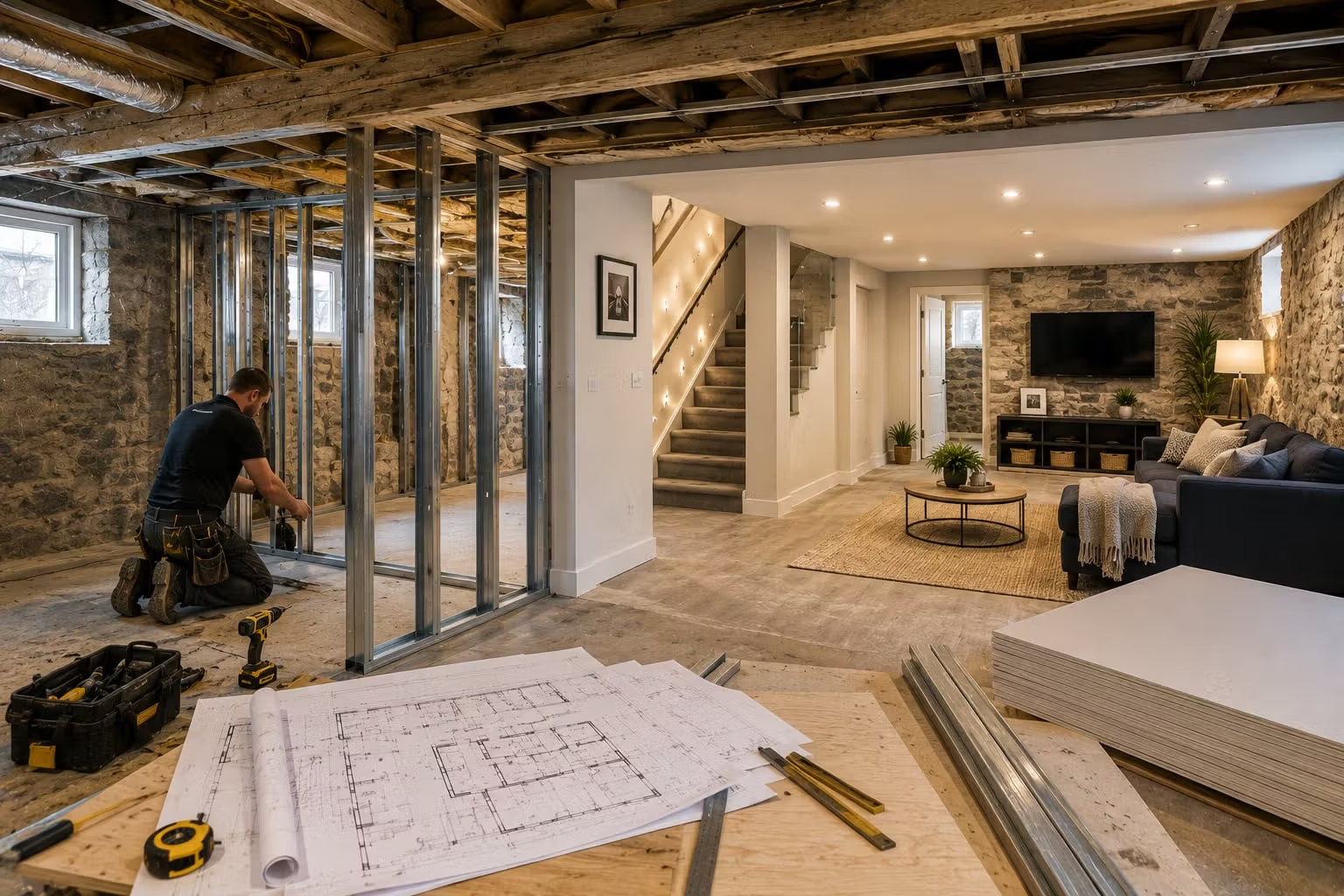
Converting an existing cellar or basement - means you already have the below-ground space. The work involves waterproofing, insulation, ventilation, lighting, and finishing — turning a damp storage space into a habitable room. No excavation, no underpinning, no structural risk to the rest of the building. This typically costs £1,200 to £2,250 per square metre in 2026, putting a straightforward 20–30m² cellar conversion somewhere in the £25,000 to £75,000 range depending on size, waterproofing method, and finish level.
Excavating a new basement - digging down beneath a home that doesn't currently have a basement is a different category of project entirely. It involves underpinning the existing foundations, building new structural retaining walls, full tanking and waterproofing systems, and significant engineering oversight.
This runs £3,000 to £5,000+ per square metre, with a typical 30m² new-dig project landing around £90,000 to £150,000 before professional fees — and considerably more in London, where access constraints and labor costs push figures toward £6,000–£10,000/m².
What this means for a Cornwall basement project
Most basement projects in Cornwall fall into the first category — converting an existing cellar or lower-ground space that's currently used for storage, rather than excavating a brand new basement under a house that's never had one. New excavation is rare outside dense urban terraces, and Cornwall's housing stock is mostly detached or semi-detached with gardens, which removes much of the pressure that drives London clients toward digging down.
That's good news for cost. It means the realistic Cornwall range for most basement conversion enquiries sits closer to £1,200–£2,500 per square metre — the cellar conversion bracket — rather than the £4,000–£6,000+ figures quoted for central London new-build basements.
What does push the number up, even within a conversion project:
- Waterproofing method - A cavity drain membrane system typically costs less than full structural tanking, but the right choice depends on ground conditions, water table, and how the space will be used. Cornwall's granite, made ground, and high-water-table areas can all affect which system is appropriate and that decision is made after a proper survey, not before.
- Ceiling height. - If the existing cellar has low headroom, lowering the floor to create a habitable ceiling height adds significant cost — typically pushing the project from the £1,200–£2,250/m² conversion bracket toward £2,000–£3,500/m², because at that point you're doing partial excavation as well as conversion.
- Access and finish - A simple storage-to-utility-room conversion costs far less than a cinema room, gym, or self-contained annexe with full kitchen and bathroom facilities. Finish level — flooring, lighting, ventilation specification, joinery — moves the number meaningfully within any bracket.
- Listed and period properties. - Cornwall has a significant number of listed and period buildings. Converting a cellar in one of these requires listed building consent for internal changes and often a more careful, slower approach to structural work — which adds cost but is non-negotiable for the building's integrity.
Other costs to budget for
Beyond the core waterproofing and structural work, a few line items consistently catch people out:
- Staircase - A new or upgraded staircase to meet Building Regulations typically costs £3,000 to £5,000.
- Kitchen or bathroom fit-out - if the conversion includes one, adds £4,000 to £8,000+ depending on specification.
- Sump pump and drainage - particularly relevant on Cornwall's wetter sites, adds a modest but necessary cost to protect against flooding risk over the building's lifetime.
- Professional fees - structural engineer, and often an architect for anything beyond a simple conversion — typically run 8 to 10 percent of the construction budget. This is one of the few costs worth resisting the urge to cut. A structural engineer's assessment before work starts is what prevents the waterproofing failures that turn a basement conversion into a recurring problem rather than a one-off investment.
Do you need planning permission?
Converting an existing cellar into a habitable room without external changes — no lightwell, no extension to the footprint — is generally permitted development and doesn't require planning permission. Building Regulations approval is always required regardless, and the Party Wall Act applies if you share a wall with a neighbouring property.
Excavating a new basement, adding a lightwell, or extending the footprint typically does require planning permission — and on listed buildings, any internal structural change requires listed building consent regardless of whether it's visible externally.
Is a basement conversion worth the investment?
Generally, yes. A basement conversion typically adds 10 to 20 percent to a property's value by creating genuinely usable floor area without changing the building's footprint or external appearance — which matters particularly on sites where planning constraints limit above-ground extension options. The return is strongest when the conversion creates clearly usable space — a bedroom, a self-contained annexe, a properly specified home office — rather than a vague "extra room" with no defined purpose.
Getting an accurate price for your project
Every figure above is a market guide, not a quote. The actual cost of your basement conversion depends on your specific ground conditions, existing structure, ceiling height, and what you want the space to become — none of which can be priced accurately without a proper survey. We assess the structure, recommend the right waterproofing approach for your site, and price against a resolved design — so the figure you receive reflects what your project will actually cost, not a national average that may have little to do with your house.
Frequently asked questions
How much does a basement conversion cost in the UK?
Converting an existing cellar typically costs £1,200 to £2,250 per square metre — around £25,000 to £75,000 for an average-sized project. Excavating a brand new basement is significantly more expensive, at £3,000 to £5,000+ per square metre, often £90,000 to £150,000 or more. Most projects outside London fall into the cellar conversion category, which is considerably more affordable than the new-excavation figures often quoted in national cost guides.
Why do basement conversion costs vary so much online?
Because "basement conversion" covers two very different projects — converting an existing below-ground space, and excavating a brand new one beneath a building that's never had a basement. The second is two to three times more expensive than the first, due to underpinning, structural retaining walls, and significantly more complex engineering. Most cost guides quote figures for both without always making clear which one they're describing.
Is a basement conversion cheaper than an extension?
Generally yes, if you're converting an existing space rather than excavating new. A cellar conversion at £1,200–£2,250/m² is typically more cost-effective than a ground floor extension, because the structure and footprint already exist. A new basement excavation, however, is usually more expensive than an equivalent above-ground extension, due to the structural complexity of building below ground.
Does a basement conversion need planning permission?
Converting an existing cellar without external changes is usually permitted development and doesn't need planning permission, though Building Regulations approval is always required. Excavating a new basement, adding a lightwell, or extending the footprint typically does require planning permission. Listed buildings require listed building consent for internal structural changes regardless.
Does a basement conversion add value to a property?
Yes — typically 10 to 20 percent, sometimes more in areas where space is at a premium. Because it adds genuinely usable floor area without changing the building's external footprint, it's one of the more efficient ways to increase both living space and property value, particularly on sites where planning constraints limit other extension options.
THINKING ABOUT A HIGH-PERFORMANCE BUILD IN CORNWALL?
Warvena Construction are TrustMark registered builders based in Redruth, Cornwall. Listed in the Passivhaus Trust directory and members of the AECB, we work across Cornwall with private clients, architects, and developers on bespoke new builds, Passive House projects, coastal renovations, and commercial construction.