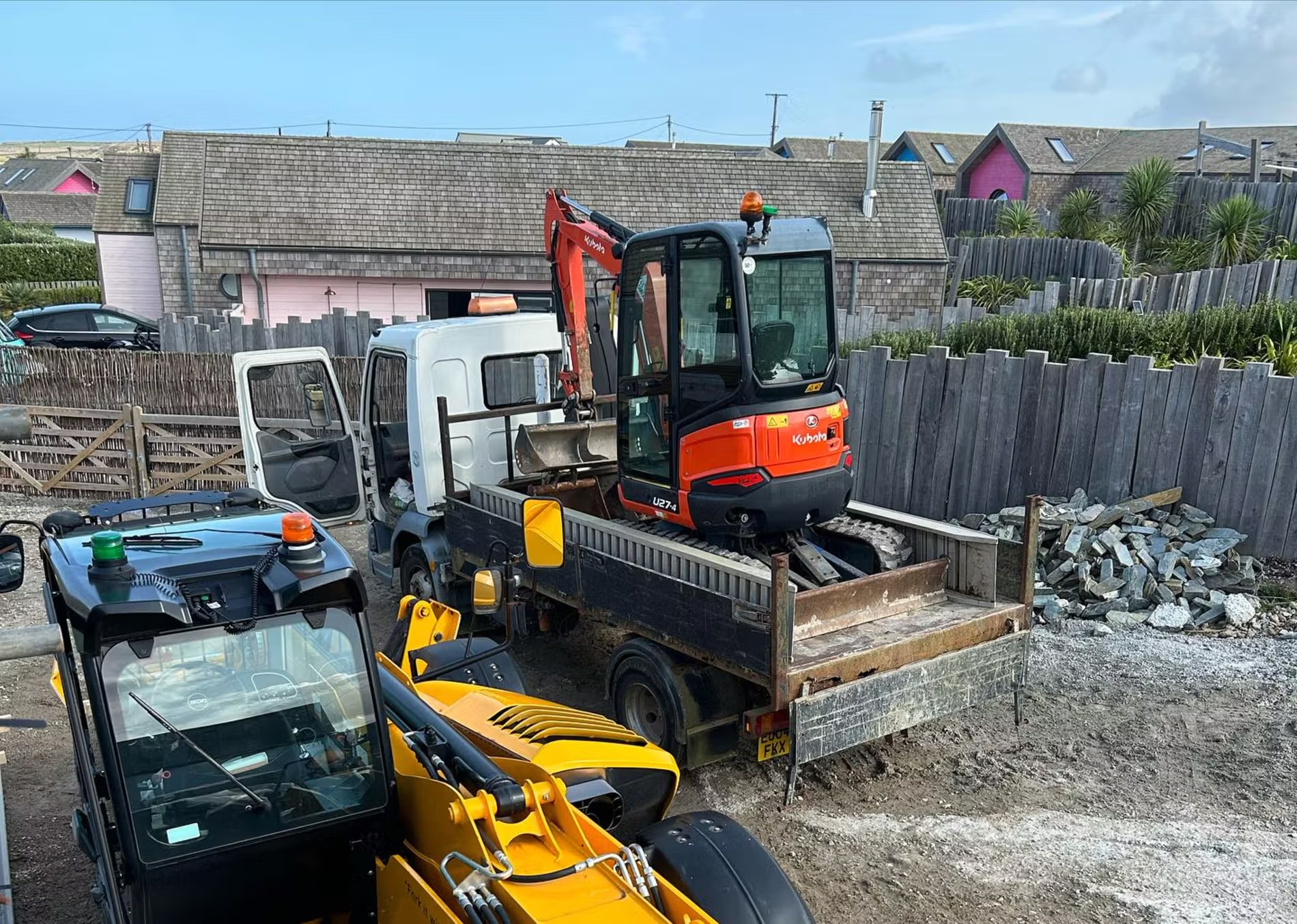
There is a common myth in the building industry that construction delays are random acts of bad luck. Weather can happen, sure, but the reality is that most site delays are entirely predictable—and preventable.
They don’t start when the first shovel hits the dirt; they start months earlier at the design table.
When a project stalls, it’s rarely because the bricklayer or carpenter is working slowly. It’s almost always because the site team is waiting on an answer, a drawing revision, or a material delivery that should have been sorted during the planning phase.
Here is how early planning keeps your build moving forward without costly pauses.
The Big Four: What Causes Site Delays (and How to Stop Them)
By identifying bottlenecks before construction begins, we can build a bulletproof roadmap for your project.
1. Waiting on Incomplete Design Details
One of the most frequent reasons a site goes quiet is that a builder hits a complex structural junction and realizes there are no detailed drawings for it. Work stops, emails fly back and forth with the architect, and days are lost.
- The Fix: Through Early Contractor Involvement (ECI), we establish a strict Information Release Schedule before work begins. Every technical detail—from airtightness membrane junctions to specific structural steel connections—is drawn, reviewed, and approved on paper first.
2. Long-Lead Material Bottlenecks
The global supply chain moves at its own pace. If you wait until you need a specialist item on site to order it, your timeline is already broken. For instance, bespoke high-performance triple-glazed windows or Passivhaus-compliant MVHR (Mechanical Ventilation with Heat Recovery) units can carry lead times of 20 to 24 weeks.
- The Fix: We flag every long-lead item during the pre-construction phase. Using a Pre-Construction Services Agreement (PCSA), we can legally secure deposits and place orders months in advance, ensuring materials arrive exactly when the site crew is ready for them.
3. Utility and Third-Party Red Tape
Getting local water, electricity, or gas companies to connect a new site can be a bureaucratic nightmare. The same goes for waiting on structural engineers or local building control officers to sign off on specific stages of the build.
- The Fix: We map out third-party timelines dynamically in our master programme. Instead of reacting on-site, we initiate utility applications and schedule inspections months ahead of time, keeping your project in line with local compliance without missing a beat.
4. Scope Creep and "On-Site" Brainstorms
It’s incredibly tempting to look at a room mid-build and say, "What if we moved this wall over two feet?" While it sounds simple, moving that wall can cause a cascading failure: it alters structural loads, redirects plumbing runs, reroutes electrical wiring, and completely scrambles the original build sequence.
- The Fix: We stress-test your brief and your lifestyle requirements before building. By visualizing how you will live in the space and locking down the specifications on paper, we drop expensive, time-wasting change orders on site down to near-zero.
How Warvena’s Pre-Construction Strategy Protects Your Project
1. The Problem: Incomplete design drawings or missing technical data.
- The Fix: We establish a strict Information Release Schedule with the design team before breaking ground.
- The Outcome: Continuous, uninterrupted work on site without builders waiting around for answers.
2. The Problem: Material shortages and global supply chain bottlenecks.
- The Fix: We arrange early procurement of specialist and long-lead items via a PCSA agreement.
- The Outcome: High-performance windows and frames arrive before the structural openings are finished.
3. The Problem: Grid connection holdups and third-party utility delays.
- The Fix: We build pre-mapped utility and building control milestones directly into the master schedule.
- The Outcome: Mains power and water are ready exactly when the site needs them.
4. The Problem: Mid-build design changes and late scope creep.
- The Fix: We conduct rigorous design stress-testing on paper alongside your architect.
- The Outcome: Zero unexpected variations, zero budget surprises, and no costly structural reworks on site.
Why High-Performance and Passivhaus Builds Have a Zero-Tolerance Policy for Delays
If you are building a high-performance or certified Passivhaus home in Cornwall, keeping a tight timeline is even more critical.
These aren't standard, traditional builds where you can just wing it as you go. Passivhaus structures rely on a meticulously planned sequence of events. For example, you cannot install internal service runs until the building's envelope has passed a strict Inspection Before Concealment to verify airtightness and thermal continuity. If one trade falls behind or installs a cable incorrectly, it can compromise the thermal envelope and stall every trade behind them.
By bringing your builder to the design table early, we ensure that every subcontractor—from the plumber to the insulation specialist—understands the exact order of operations. We don't just build faster; we build smarter.
Frequently Asked Questions
How does early contractor involvement actually prevent project delays?
When a builder is involved early, they act as a second pair of eyes on the architectural drawings. We spot material shortages, long lead times, and tricky engineering elements while they are still on paper. Solving these logistical puzzles before the ground is broken means we never have to stop work on site to wait for answers or parts.
What is the biggest risk of waiting until the design is completely finished to hire a builder?
The biggest risk is "tender shock"—discovering that your dream design costs 40% more to build than your budget allows. This forces you into months of painful, expensive design reworks with your architect, delaying your start date significantly. Hiring us early via a PCSA Agreement keeps your design grounded in real-time market costs.
Can bad weather in Cornwall completely ruin my construction schedule?
While we can't control the Cornish rain or coastal gales, a well-planned pre-construction strategy cushions the blow. By accurately sequencing the build, we ensure the structural shell is wind- and watertight before the worst weather seasons hit. This allows our teams to seamlessly transition to internal works (like insulation, MVHR installation, and first-fix electrics) without losing time.
How do mid-build changes affect the timeline?
Even a seemingly minor change—like changing a window size or shifting a bathroom layout mid-build—creates a massive domino effect. It can trigger structural recalculations, void material orders, and force trades to undo finished work. We prevent this by thoroughly stress-testing your design and lifestyle goals during our initial pre-construction sessions.
Let's Plan Your Build Right, From Day One
Don't leave your construction timeline to chance. If you are planning a bespoke new build, eco-renovation, or extension anywhere in Cornwall, get in touch with our team today. Let’s talk about how we can protect your budget and your move-in date before the first spade hits the dirt.
Get in touch with the Warvena team ↗ | Explore our recent builds in Cornwall ↗