Homes Cornwall
Timber vs Masonry in Cornwall
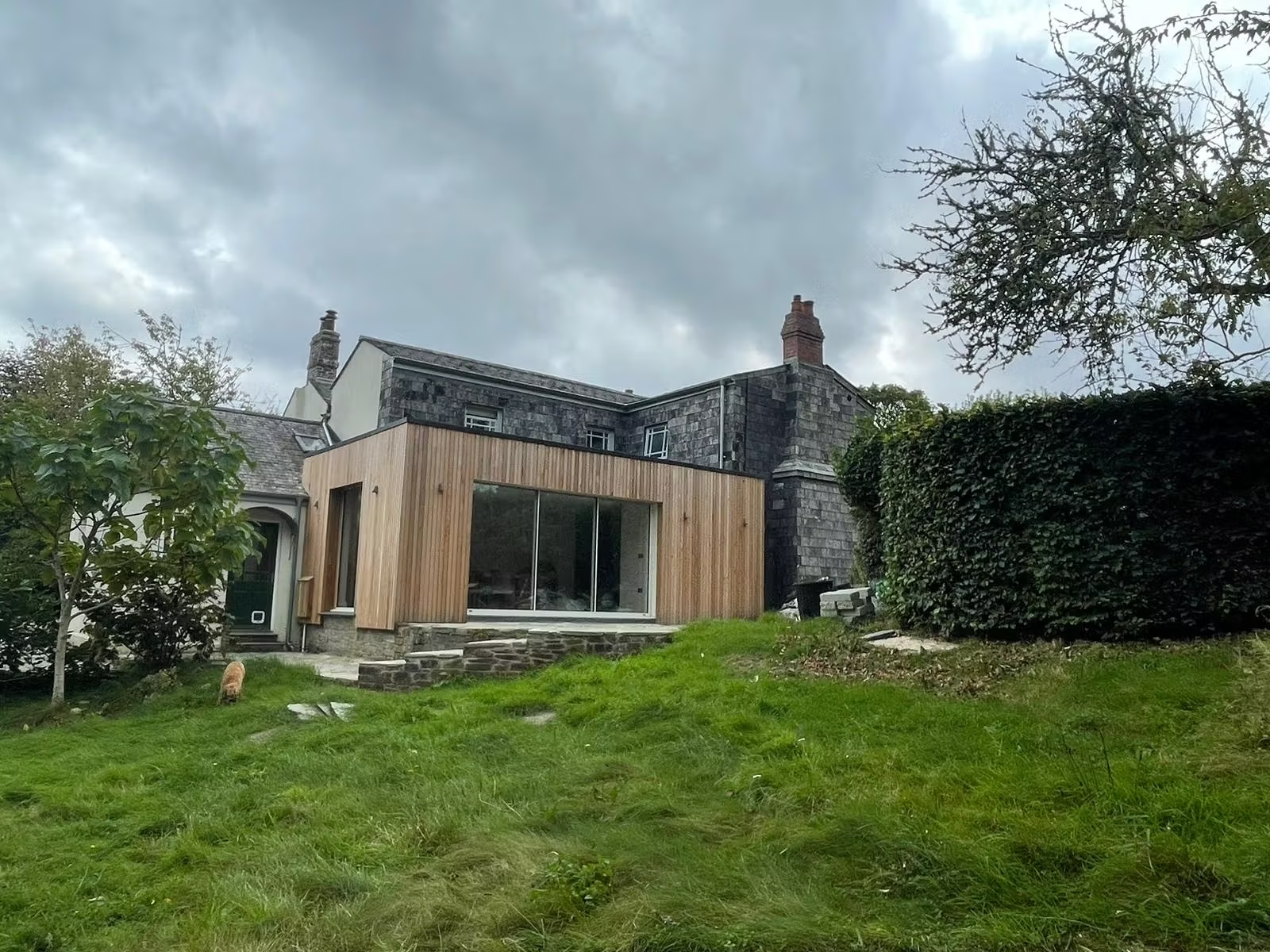
When it comes to building homes in Cornwall, **timber frame** and **masonry** construction are two of the most common methods used. Each has its advantages, but in an era where sustainability and energy efficiency are increasingly important, the choice between **timber frame** and **masonry** can make a significant difference in terms of both environmental impact and performance. At Warvena Construction, we specialize in **low carbon & timber frame** homes, which offer numerous benefits over traditional masonry, particularly in the context of Cornwall's coastal environment.
In this article, we will compare **timber frame** and **masonry** construction in Cornwall, focusing on their environmental impact, energy efficiency, durability, and suitability for the local climate. By the end, you’ll have a better understanding of why **timber frame** construction is becoming the preferred choice for sustainable homes in Cornwall.
LOW CARBON & TIMBER FRAME: An Ideal Solution for Cornwall
**LOW CARBON & TIMBER FRAME** construction uses sustainable, renewable materials like timber, which naturally stores carbon and helps offset emissions associated with construction. This makes it an ideal choice for homeowners in Cornwall who are looking to reduce their carbon footprint without compromising on quality or luxury.
One of the key benefits of **timber frame** construction is its natural insulation properties. Timber is a highly efficient insulator, helping to maintain consistent indoor temperatures throughout the year. This is particularly important in Cornwall, where the coastal climate can cause temperature fluctuations. Homes built with **timber frame** construction typically require less energy to heat and cool, reducing long-term energy consumption and lowering utility bills.
What is Masonry Construction?
**Masonry** construction refers to buildings made from solid materials such as brick, stone, or concrete blocks. These materials are highly durable, weather-resistant, and provide excellent structural strength. In **masonry** construction, the walls are typically load-bearing, meaning they support the weight of the structure above them. While **masonry** is widely used in construction, it does come with its drawbacks, especially in terms of energy efficiency and environmental impact.
**Masonry** homes are typically more energy-intensive to heat and cool because the materials used in masonry, such as concrete and brick, are less insulating than timber. This means that homes built using **masonry** can be more expensive to maintain over time due to higher energy costs. Additionally, masonry construction tends to have a larger carbon footprint, as the production of concrete and brick materials involves energy-intensive processes and significant emissions.
Timber Frame vs Masonry in Cornwall: Key Comparisons
Now, let’s take a look at how **timber frame** and **masonry** construction compare in key areas, particularly in the context of building homes in Cornwall:
1. Environmental Impact
**Timber frame** construction is significantly more environmentally friendly compared to **masonry**. Timber is a renewable resource that naturally absorbs carbon, making it a **low carbon** building material. By using **timber frame**, we can reduce the carbon footprint of a home and contribute to sustainability. In contrast, **masonry** materials like concrete and brick are energy-intensive to produce and have a higher embodied carbon footprint.
2. Energy Efficiency
When it comes to energy efficiency, **timber frame** homes are the clear winner. Timber has natural insulating properties, helping to reduce the need for artificial heating and cooling. This is especially important in Cornwall, where homes are exposed to varying weather conditions. On the other hand, **masonry** homes tend to require more energy for heating and cooling due to the thermal mass of brick and stone, which can absorb heat and release it slowly, leading to increased energy consumption.
3. Durability and Maintenance
**Masonry** is known for its durability and resilience, particularly in coastal environments like Cornwall. It is resistant to weathering, moisture, and pests, which makes it ideal for areas exposed to harsh coastal conditions. However, **timber frame** homes can also be highly durable when properly treated, and modern **timber frame** construction methods incorporate advanced moisture protection and pest resistance techniques. Additionally, **timber frame** homes are generally easier and cheaper to maintain compared to **masonry** homes, as masonry materials can crack, deteriorate, and require costly repairs over time.
4. Construction Time and Cost
One of the advantages of **timber frame** construction is its speed. **Timber frame** homes are typically quicker to build than **masonry** homes, as the prefabricated timber components can be assembled on-site much faster than laying bricks or stone. This not only reduces construction time but also helps lower labor costs. While **masonry** homes can take longer to build and are generally more expensive in terms of both labor and materials, **timber frame** homes provide a more cost-effective and efficient solution.
Why Choose Timber Frame Construction for Your Home in Cornwall?
Building a home with **timber frame** construction in Cornwall offers a variety of benefits. The **low carbon** properties of timber make it an environmentally responsible choice, while its natural insulation capabilities help reduce energy consumption. For homeowners in Cornwall, where coastal weather and energy efficiency are top priorities, **timber frame** construction is the ideal solution.
At Warvena Construction, we specialize in **low carbon & timber frame** homes, offering custom designs that meet the unique needs of each homeowner. Whether you’re looking for a traditional coastal retreat or a modern, sustainable home, we have the expertise and experience to bring your vision to life. Visit our projects page to explore some of our recent builds.
Why Choose Warvena Construction?
Warvena Construction has been at the forefront of **sustainable building practices** in Cornwall. With our expertise in **low carbon & timber frame** construction, we create homes that are energy-efficient, environmentally friendly, and built to last. Our team works closely with clients to ensure that their **bespoke homes** are designed to meet their specific needs while adhering to the highest standards of sustainability.
If you're interested in building a **low carbon timber frame** home in Cornwall, we would love to help you bring your dream home to life. Visit our About Us page to learn more, or get in touch with us today to start your project.
Building the Future of Sustainable Homes in Cornwall
At Warvena Construction, we believe that **timber frame** homes are the future of sustainable living. By combining **low carbon** materials with energy-efficient designs, we create homes that are not only luxurious but also kind to the planet. Let us help you build a **timber frame home** in Cornwall that is built to last and designed for modern living.
Frequently Asked Questions About Timber Frame vs Masonry Construction
What is the difference between timber frame and masonry construction?
**Timber frame construction** uses timber as the primary structural material, offering superior insulation and energy efficiency. **Masonry construction** uses materials like brick, stone, or concrete blocks for the structure, which is durable but generally less energy-efficient.
Why is timber frame construction more energy-efficient than masonry?
**Timber frame homes** have natural insulating properties that reduce the need for heating and cooling. **Masonry homes**, while durable, have lower insulation properties and can absorb heat, leading to higher energy consumption over time.
What are the environmental benefits of timber frame construction?
Timber is a renewable resource and stores carbon, which helps reduce the environmental impact of construction. **Timber frame construction** also typically has a lower carbon footprint than **masonry** due to the energy-intensive processes involved in making brick and concrete.
Which is better for building a home in Cornwall, timber frame or masonry?
For Cornwall's coastal environment, **timber frame construction** is an excellent choice due to its energy efficiency, flexibility, and ability to withstand moisture and temperature fluctuations. While **masonry** offers durability, **timber frame** construction provides better performance in terms of energy efficiency and sustainability.
How long does it take to build a timber frame home compared to a masonry home?
**Timber frame homes** are typically faster to build than **masonry homes** due to the use of prefabricated components. This reduces on-site construction time, allowing homeowners to move in sooner and saving costs on labor.