Fire Safety Engineering & Timber Frame Systems
Fire Strategy in Timber Frame Luxury Homes: Technical Depth & Thought Leadership from Warvena Construction
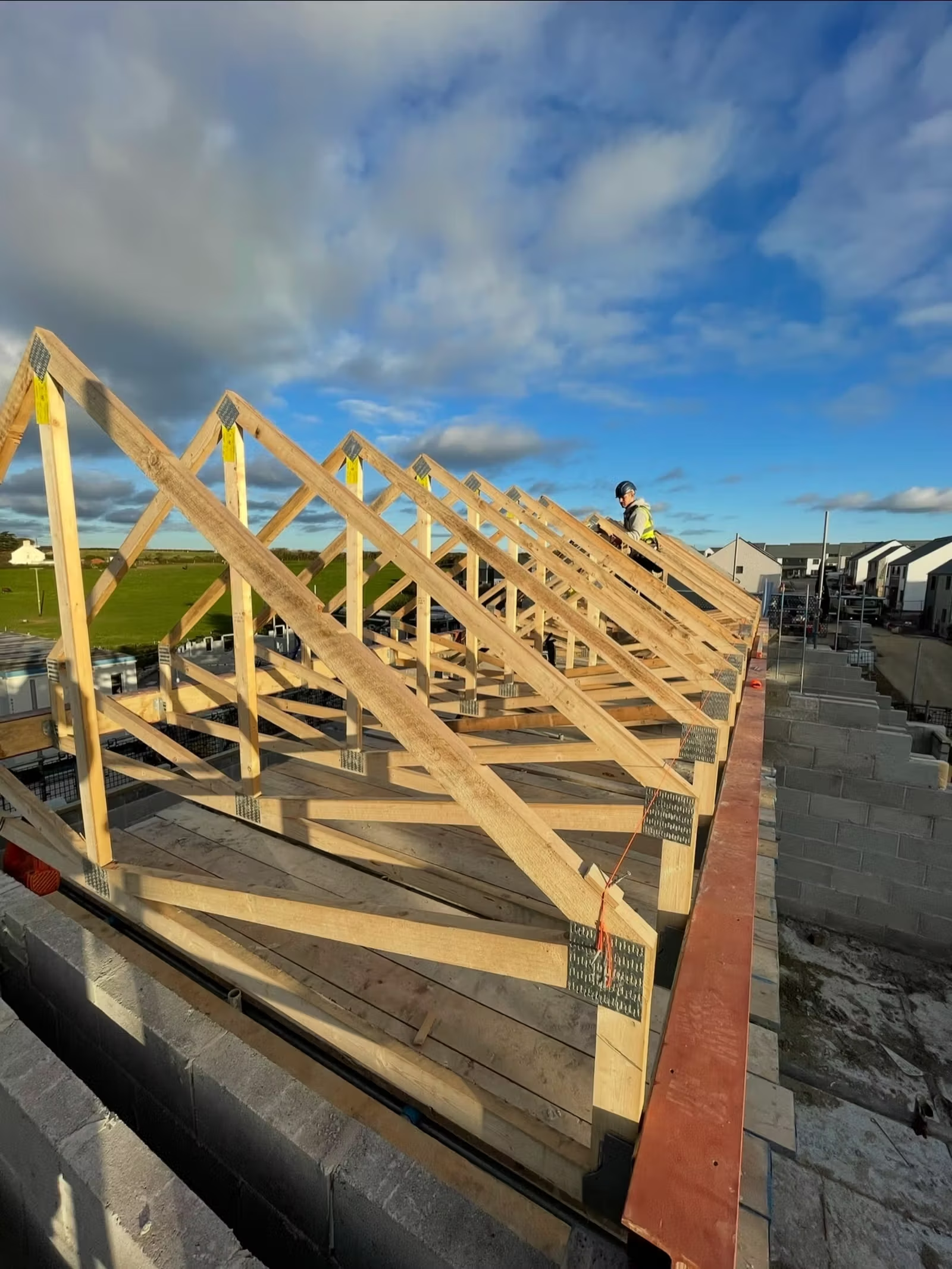
Timber frame construction is experiencing a well-deserved renaissance in bespoke residential architecture. Its structural elegance, thermal performance credentials, and design flexibility make it a natural choice for luxury homes in Cornwall's varied landscape — from exposed coastal headlands to sheltered rural valleys. But timber is a combustible material, and building exceptional homes with it requires a fire strategy that matches the ambition of the design. At Warvena Construction, our technical depth and thought leadership ensure that fire performance is not bolted on at the end — it is designed, detailed, and built into every layer of every home we deliver.
Why Fire Strategy Is Central to Timber Frame Excellence
There is a persistent misconception that building in timber means accepting a compromise on fire safety. The reality is more nuanced — and ultimately more reassuring. Engineered timber, when properly specified and protected, performs predictably in fire. Heavy structural timber sections char slowly and maintain structural integrity far longer than unprotected steel, which can fail rapidly under heat. The challenge is not the material itself, but the quality of the fire strategy that governs how it is used, protected, and detailed.
A robust fire strategy for a timber frame luxury home addresses three interconnected priorities:
- Passive fire protection — the use of fire-resistant materials, compartmentation, and construction detailing to contain and slow the spread of fire within the building fabric.
- Active fire protection — detection, alarm, and suppression systems that alert occupants and respond to fire events in real time.
- Means of escape — the planning and design of routes, door widths, travel distances, and protected lobbies that allow safe evacuation for all occupants.
Delivering all three at the level a luxury home demands requires the kind of technical depth and thought leadership that Warvena brings to every project from the very first design conversation.
The Regulatory Framework: Building Regulations Approved Document B
In England, fire safety in residential construction is governed by Approved Document B (ADB) of the Building Regulations — a detailed technical framework covering fire detection, means of escape, internal fire spread via linings and structure, external fire spread, and access for the fire service.
For timber frame homes, ADB compliance requires careful attention to several specific requirements:
Reaction to Fire of Wall and Ceiling Linings
Internal surface linings — plasterboard, timber cladding, acoustic panels — must meet minimum reaction-to-fire classifications. Fire-rated plasterboard (typically Type F or Type X) is standard in Warvena timber frame builds, providing both passive fire resistance and acoustic performance. Exposed structural timber used decoratively must be assessed and, where required, treated with intumescent coatings to meet lining classification requirements.
Compartmentation and Fire Resistance of Elements
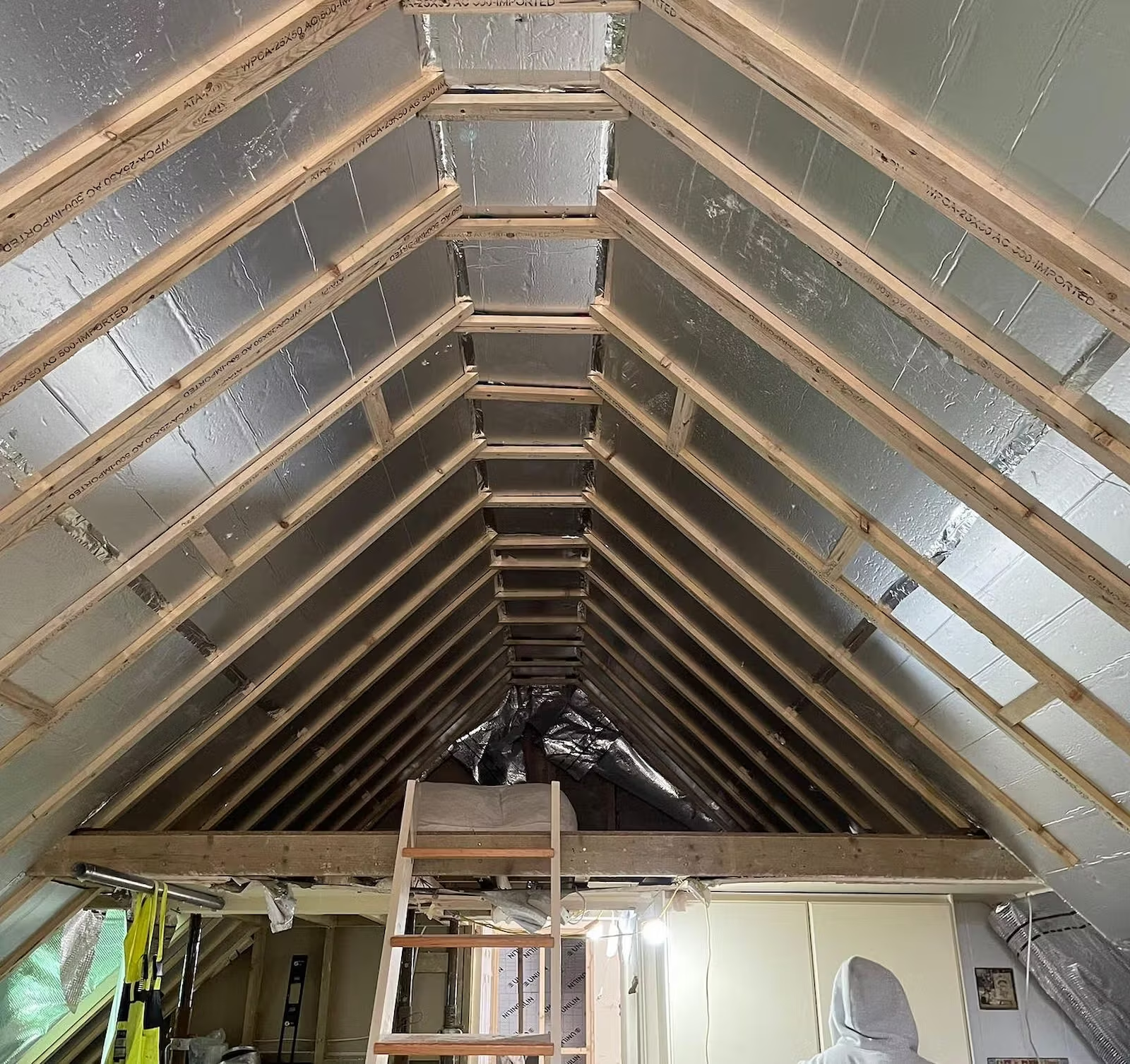
Building Regulations require that floors and walls between dwellings — and between certain areas within a single dwelling — achieve minimum periods of fire resistance, typically 30 or 60 minutes. In timber frame construction, this is achieved through careful selection of structural member sizes, the use of fire-rated board products applied in specified configurations, and the installation of cavity barriers and firestops at every junction where a cavity could allow fire or smoke to travel unseen through the structure.
Cavity Barriers and Firestopping
This is one of the most technically demanding aspects of timber frame fire strategy — and one of the most commonly executed poorly by builders who lack genuine expertise. Cavities within timber frame wall and floor constructions create potential fire pathways. Building Regulations require cavity barriers to be installed at specific intervals, at the edges of every opening, and at every junction between elements. These barriers must be made from materials that will expand and seal the cavity if exposed to heat — intumescent products that require careful selection and precise installation.
Warvena's site teams are trained in the correct installation of cavity barriers and firestops, and our quality management process includes inspection at every stage before linings are closed. See the standard of work we deliver across our bespoke project portfolio.
Thought Leadership: Fire Strategy as a Design Discipline
At Warvena, thought leadership means integrating fire strategy into the design process from day one — not treating it as a compliance checklist to be addressed at building control submission stage.
"With our extensive knowledge and experience, we empower you to make informed decisions every step of the way. We believe that a well-informed client is key to a successful partnership." — Warvena Construction
Early Engagement With Fire Engineers
For complex or large bespoke homes — particularly those with open-plan layouts, significant floor areas, or unusual geometries — Warvena recommends early engagement with a specialist fire engineer. A fire engineer can develop a performance-based fire strategy that achieves the design intent while demonstrating compliance through calculation and modelling rather than relying solely on prescriptive ADB solutions. This approach can unlock design freedom — larger open-plan spaces, more ambitious glazed openings, dramatic double-height volumes — that prescriptive compliance alone might constrain.
Sprinkler Systems in Luxury Timber Frame Homes
Residential sprinkler systems are increasingly common in high-specification timber frame homes, even where they are not strictly required by regulation. The reasons are compelling from both a safety and a design perspective:
- Sprinklers dramatically reduce the risk of catastrophic fire loss in a home that represents a significant emotional and financial investment.
- They can enable a more relaxed approach to certain passive fire protection requirements, supporting greater design freedom.
- Modern residential sprinkler heads are unobtrusive and can be integrated seamlessly into high-quality interior finishes.
- Some insurers offer premium reductions for sprinkler-protected properties, providing a tangible financial return.
Warvena advises clients on the case for residential sprinklers as part of our holistic approach to fire strategy — a genuinely thought-led conversation that goes well beyond minimum compliance.
External Fire Spread and Cladding
Following the Grenfell Tower tragedy, external fire spread and cladding specification have become subjects of intense regulatory scrutiny. For residential buildings under 11 metres — which covers the majority of bespoke luxury homes — the requirements relate to the reaction-to-fire classification of external wall materials and the provision of cavity barriers at every floor level within ventilated or drained cladding systems.
Warvena's approach to external cladding specification — whether natural stone, timber, render, or composite materials — always considers fire performance alongside aesthetics, durability, and maintenance. We work only with materials whose reaction-to-fire data is fully documented and compliant, and our installation details are reviewed against current NHBC and ADB guidance before work commences on site.
Fire Strategy Across Cornwall's Distinct Building Contexts
ornwall's diverse landscape and building typologies present specific fire strategy challenges that require local expertise:
Remote Rural and Coastal Sites
Properties in remote rural or coastal locations in Cornwall may be distant from fire station response. This makes early detection, reliable alarm systems, and — increasingly — residential sprinklers not just desirable but arguably essential. Fire service access routes must also be carefully considered during design, as many rural Cornish sites present access challenges for appliances. Warvena addresses these factors proactively as part of our site appraisal process.
AONB and Conservation Area Projects
Projects within Areas of Outstanding Natural Beauty or Conservation Areas may face planning constraints on the external appearance of fire-related elements — alarm bells, sprinkler infrastructure, external access panels. Warvena's experience navigating Cornwall's planning sensitivities means these elements are integrated discreetly without compromising their function.
Heritage Integration and Extensions
When a timber frame extension is added to an existing masonry property, the interface between old and new construction requires particular care. Fire compartmentation must be maintained at the junction, cavity barriers must be retrofitted into existing wall constructions where required, and the means of escape from the extended dwelling must be reviewed as a whole. Warvena's expertise in both traditional Cornish construction and modern timber frame systems makes us uniquely well-placed to manage these technically demanding interfaces.
Discuss your project with our team via our contact page or call us directly to explore how we approach fire strategy for your specific site and brief.
Quality, Craftsmanship, and the Uncompromising Execution of Fire Details
The finest fire strategy on paper is only as good as the quality of its execution on site. Firestops that are compressed incorrectly, cavity barriers that are cut around rather than fitted through, intumescent collars omitted from service penetrations — these are not hypothetical failures. They occur regularly on sites where fire detailing is treated as a footnote rather than a primary construction obligation.
At Warvena, our commitment to craftsmanship and quality extends explicitly to fire-related details. Our site teams understand why these details matter. Our project management process includes hold points — mandatory inspection stages before linings are closed — at which fire protection details are reviewed and documented. We take pride in knowing that the homes we build are not only beautiful but genuinely safe.
This is what it means to bring technical depth and thought leadership to a building project — and it is what sets Warvena Construction apart in the Cornwall luxury residential market. Learn more about our values and approach on our About page.
Frequently Asked Questions About Fire Strategy
Q: Is timber frame construction safe from a fire perspective for a luxury home?
A: Yes — when properly designed, specified, and built. Engineered timber performs predictably in fire; heavy timber sections char slowly and maintain structural integrity for extended periods. The key is a comprehensive, well-executed fire strategy covering passive protection, active systems, and means of escape. Warvena's technical expertise ensures that every timber frame home we build meets and typically exceeds Building Regulations fire safety requirements. Speak to our team to discuss your project in detail.
Q: What are cavity barriers and why are they so important in timber frame construction?
A: Cavity barriers are fire-stopping elements installed within the cavities of timber frame wall and floor constructions to prevent the unseen spread of fire and smoke through concealed spaces. They are required by Building Regulations at specific intervals, around all openings, and at every junction between elements. In timber frame construction, incorrectly installed or omitted cavity barriers represent one of the most serious potential fire safety failures. Warvena's rigorous inspection process and trained site teams ensure cavity barriers are installed correctly every time, with photographic documentation before linings close.
Q: Do I need a sprinkler system in my timber frame luxury home in Cornwall?
A: In Wales, residential sprinklers are required in all new dwellings by regulation. In England, they are not universally mandated for houses, but are required in certain building types and are increasingly recommended — particularly for large, high-specification, or remotely located homes. For rural and coastal properties in Cornwall where fire service response times may be longer, Warvena strongly recommends considering a residential sprinkler system. Beyond safety, sprinklers can enable greater design freedom and may reduce insurance premiums. We discuss sprinkler options with all timber frame clients as part of our fire strategy consultation.
Q: How does Warvena coordinate fire strategy with architects and structural engineers on a bespoke project?
A: Warvena operates as a genuine construction partner within the project team — engaging with architects, structural engineers, and fire engineers from the early design stages rather than waiting for construction to begin. We review fire strategy implications of proposed layouts, flag potential compliance challenges before they become costly problems, and ensure that fire details are fully resolved in the construction drawings before site work commences. This collaborative, proactive approach is central to how we deliver bespoke projects at the highest standard. Browse our project portfolio to see the results.
Q: How do I start planning a timber frame luxury home in Cornwall with Warvena Construction?
A: The first step is a conversation. Call us on 01872 300856 — we return all calls within two hours — or reach us through our contact page. We will discuss your site, your design aspirations, your programme, and your budget, and provide honest, accurate guidance from the outset. Our approach is grounded in realistic costing, transparent communication, and the kind of technical depth that gives you genuine confidence from the first conversation to final handover.