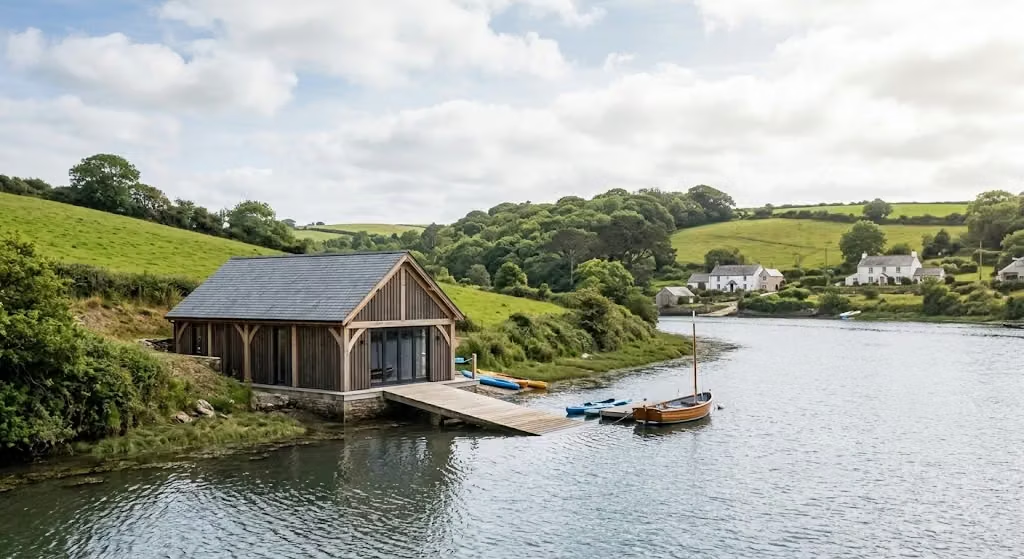
New Build
Planning Permission & Coastal Regulations for Boathouses in Cornwall
Constructing a waterfront boathouse along Cornwall’s coastline, estuaries, or tidal rivers requires careful navigation of strict environmental and planning rules. Whether you are building a private slipway storage facility or a custom timber frame boathouse, early regulatory approval is essential.
Key Regulatory Authorities & Rules
- Cornwall Council Planning Permission: Any permanent structure along the shoreline requires full planning consent, particularly when assessing visual impact in Areas of Outstanding Natural Beauty (AONB) or Heritage Coasts.
- Marine Management Organisation (MMO) Licensing: Works taking place below the Mean High Water Springs (MHWS) mark often require an MMO marine license alongside local planning approval.
- Environment Agency Approval: Flood risk assessments (FRA) and surface water drainage approvals are mandatory for developments in high-risk tidal or flood zones.
Coastal Timber Frame Engineering
Marine environments present unique challenges like high salt air, tidal surges, and damp conditions. Working with specialized boathouse builders in Cornwall ensures marine-grade timber, corrosion-resistant stainless steel fixings, and durable slate roofing are utilized.
Essential Layout & Material Considerations for Waterfront Boathouses
Designing a long-lasting boathouse involves blending practical watercraft launching functionality with weather-resistant architectural design.
1. Substructure & Marine Foundation Options
- Concrete Piles & Pads: Reinforced concrete footings anchored into bedrock or hard subsoil provide maximum protection against tidal erosion and ground movement.
- Hardwood Timber Pilings: Traditional greenheart or oak pilings offer authentic aesthetics for estuarine or freshwater sites.
2. Internal Layout & Storage Design
- Electric Winch & Slipway Integration: Custom slipways fitted with heavy-duty winches make launching and retrieving vessels simple regardless of tide levels.
- Ventilation & Moisture Control: Incorporating high-level ventilation slats prevents condensation buildup, protecting stored timber boats, sails, and marine hardware.
For broader property developments involving rural or agricultural structures, consult our guide on equestrian builders in Cornwall to explore custom groundworks and timber engineering solutions.
Frequently Asked Questions About Boathouse Construction in Cornwall
Do I need a marine license from the MMO to build a boathouse?
If any portion of your boathouse, slipway, or piling construction extends below the Mean High Water Springs (MHWS) tide line, you will likely need a Marine Management Organisation (MMO) license in addition to local planning permission.
What materials are best suited for coastal boathouse construction?
Oak timber frames, greenheart pilings, natural Cornish slate, and 316 marine-grade stainless steel fixings offer the highest resistance to salt corrosion, coastal winds, and humidity.
How long does boathouse planning approval take in Cornwall?
Planning decisions typically take 8 to 12 weeks. However, projects requiring flood risk assessments, ecological surveys, or MMO approvals may take 12 to 16 weeks.
Can a boathouse be converted into residential space?
Converting a boathouse into living accommodation is subject to strict planning controls, flood risk restrictions, and coastal conservation policies. Most boathouses are restricted to non-residential marine storage use.
Planning a Waterfront or Boathouse Project in Cornwall?
Get in touch with our specialist team today to discuss planning permissions, marine engineering, and bespoke timber builds.