New Build
Planning Guide
Planning Permission & Design Considerations for Stables in Cornwall
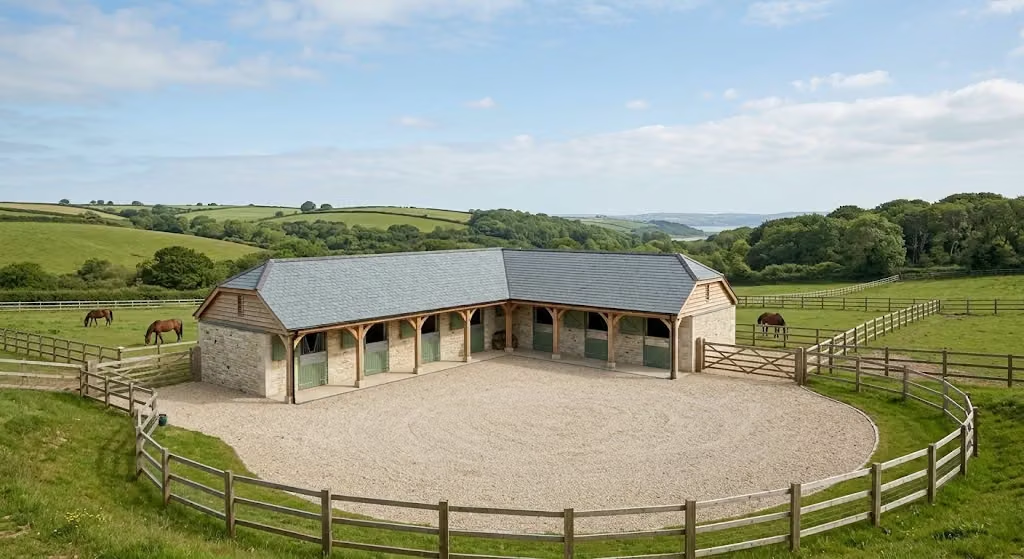
Developing bespoke equestrian facilities—from stable blocks and tack rooms to outdoor riding arenas (mênages)—requires balancing horse welfare with local planning compliance across Cornwall's countryside.
Key Planning Rules for Equestrian Builds
- Agricultural vs. Equestrian Land Use: Converting agricultural land to equestrian use requires a change-of-use planning application through Cornwall Council.
- Drainage & Waste Management: Proper manure management and surface water drainage plans are essential to prevent run-off into local waterways and satisfy Environment Agency requirements.
- Lighting & AONB Rules: If your property falls within a Protected Landscape (formerly AONB), outdoor arena lighting (floodlights) and building height/materials will be strictly reviewed to preserve dark skies and rural aesthetics.
Expert Installation & Earthworks
To design and construct custom equestrian facilities tailored to your property, partner with specialized boathouse builders in Cornwall or equestrian builders in Cornwall who manage groundworks, stable assembly, and full site development.
Section 2
Essential Layout & Material Considerations for Cornwall Stables
Designing a high-performing equestrian facility requires balancing everyday practical workflow, ventilation, structural durability, and horse safety.
1. Ventilation & Internal Climate Control
Cornwall’s coastal weather can range from humid summers to damp, windy winters. Good stable design prioritizes natural airflow without creating harsh drafts. High ceilings, ridge vents, and wide stable doors help regulate humidity and prevent respiratory issues in horses.
2. Durable Foundations & Flooring Options
- Concrete Sub-bases: Engineered concrete pads with non-slip brushed finishes are essential for stable blocks, tack rooms, and wash bays.
- Rubber Matting Integration: Fitting heavy-duty rubber matting over smooth concrete improves horse joint comfort, reduces bedding usage, and simplifies daily cleaning.
3. Tack Room Security & Hay Storage
Equestrian equipment and winter feed require secure, dry storage:
- Secured Tack Rooms: Incorporating reinforced doors, multi-point locks, and climate-controlled drying spaces protects high-value saddles and tack.
- Separate Hay Barns: Storing hay and straw in a dedicated, well-ventilated structure reduces fire risk near stable blocks.
If you are planning a complete build or need guidance on coastal waterfront structures, explore our guides on boathouse builders in Cornwall or consult with specialized contractors who handle complex site prep and timber engineering.
Frequently Asked Questions About Equestrian & Waterfront Builds in Cornwall
Yes, most equestrian developments require planning permission from Cornwall Council. Keeping horses for leisure or commercial use changes land classification from agricultural to equestrian use. Additionally, if your property is situated within a Protected Landscape (formerly AONB), strict rules apply regarding building height, materials, and floodlighting.
Do I need planning permission for a stable block or riding arena in Cornwall?
Yes, most equestrian developments require planning permission from Cornwall Council. Keeping horses for leisure or commercial use changes land classification from agricultural to equestrian use. Additionally, if your property is situated within a Protected Landscape (formerly AONB), strict rules apply regarding building height, materials, and floodlighting.
How long does it take to get planning approval for stables or boathouses?
Planning applications in Cornwall typically take between 8 to 12 weeks from submission to decision. Projects requiring specialist ecological surveys, flood risk assessments, or Marine Management Organisation (MMO) approvals for boathouses may take slightly longer.
What materials are best for building stables in coastal or rural Cornwall?
Pressure-treated timber framing, natural slate roofing, and marine-grade stainless steel fixings are ideal. These materials handle Cornwall’s high coastal moisture, salt air, and strong winds while blending seamlessly into the rural landscape.
What is the ideal site drainage system for outdoor riding arenas (mênages)?
A multi-layered drainage system featuring deep herringbone pipe networks, clean stone drainage layers, and heavy-duty permeable geotextile membrane filters. This prevents waterlogging and protects equestrian surfaces during heavy rain.