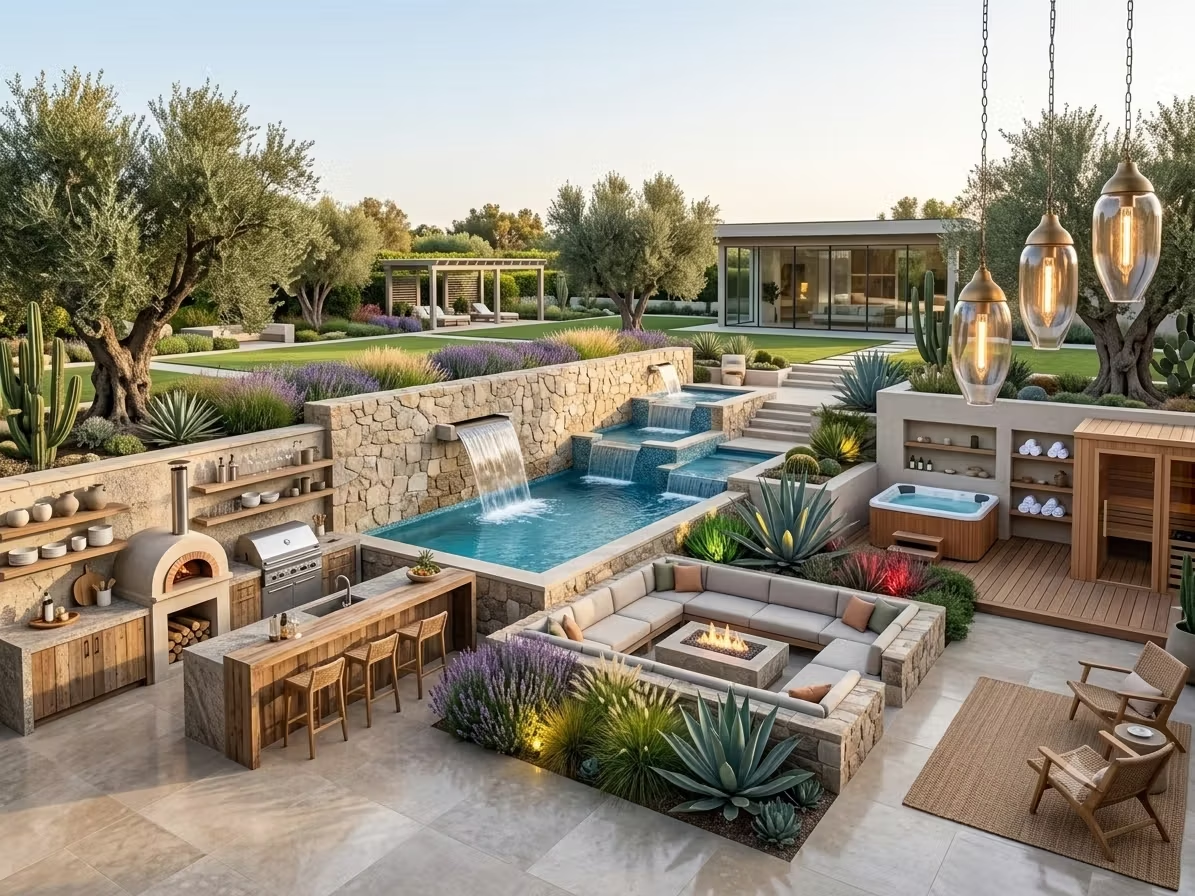
Start with the kitchen — but place it for wind, not just looks
Most outdoor kitchen advice talks about layout before anything else. Layout matters, but in a UK garden, wind matters more, and it gets decided first.
Put the cooking station on the leeward side of the garden — out of the prevailing wind — and everything downstream of that decision gets easier. Smoke clears away from the table instead of into it. Heaters work properly instead of fighting a breeze. An L-shape still does the heavy lifting here: grill, prep surface, fridge or drinks station, close enough together that the cook isn't walking back and forth all evening.
A wood-fired pizza oven is the one upgrade worth the extra outlay, not because of the pizza — because of what it does once it's lit. People drift toward it without being told to. Pair it with a proper gas or charcoal grill and you've got range: quick midweek cooking on one side, slow weekend theatre on the other.
On materials — porcelain or concrete-look worktops handle UK frost and rain without cracking. Stainless steel resists salt air better than people expect, which matters if you're anywhere near the coast. Skip indoor cabinetry entirely. It doesn't survive outside a season.
→ See how we approach bespoke joinery for outdoor cabinetry that's actually built to last outside
Cover comes before furniture
This is the bit most people get backwards. They buy the sofa, the dining set, the rug — and only think about shelter once the first wet weekend ruins the plan.
A few real options, depending on budget and how often you want to use the space:
A slatted timber pergola gives you dappled shade in summer and a frame for string lights come evening. Add a removable shade sail or a clear winter roof panel if you want it to earn its keep past September.
A louvre roof costs more but adjusts to the weather rather than just sitting there fixed — genuinely usable in every season, which on balance makes it the better long-term investment if the budget stretches.
A retractable canopy is the middle ground. Great over a dining table specifically, pitched slightly so rain runs off into a gravel channel rather than pooling.
Whichever you choose, get the height right. Anything with a fire feature beneath it needs proper clearance for ventilation — roughly three metres minimum — both for safety and so smoke doesn't just sit trapped under the roof with you.
The fire pit goes where people already want to sit
Not at the edge of the lawn, where it photographs nicely from the kitchen window and nobody ever actually walks over to it.
Some large gardens go further and create a sunken seating area around the fire pit — lowering that section of patio by a step or two, with built-in bench seating around the rim. It does something psychological that a flat fire pit on open paving doesn't: it feels like its own room, even without walls.
A built-in stone or brick surround, matched to your existing paving, reads as permanent and considered rather than dropped in as an afterthought. It also gives you somewhere to perch when the chairs run out, which they always do.
Deep, cushioned seating you can properly sink into — not the kind you perch on for ten minutes before heading back inside — is genuinely what keeps people outside past nine. A coffee table doubling as extra fire-pit seating earns its space twice over.
→ If you're combining this with structural work — raised decking, retaining walls for a sunken zone, hard landscaping that needs proper drainage — that's where the groundwork starts mattering more than the furniture.
Hot tubs and saunas: screen, don't hide
A large garden gives you the luxury of putting the spa corner somewhere it can actually feel separate — far enough from the main gathering area that it reads as its own retreat, close enough that it still feels like part of the same garden rather than a bolt-on at the end.
Screening with planting works better than fencing it off entirely. Tall grasses, a single well-placed tree, or a slatted timber screen give you privacy from neighbouring windows without making the hot tub feel like it's hiding from the rest of the garden.
Saunas do well clad in cedar — it weathers to a soft silver-grey over time and ties into almost any planting palette around it. What actually determines whether either feature lasts, though, is underneath: a level, load-bearing base for a hot tub, and genuine ventilation for a sauna, not just a door propped open after each use. Skip that groundwork and you're looking at moisture problems within a year or two, hidden behind a feature that looks fine from the outside right up until it doesn't.

Bringing it together
None of these three zones need to compete with each other — and in a large garden, they shouldn't have to. The kitchen does the cooking and the gathering. The pergola and fire pit hold the evening together once the food's done. The hot tub or sauna gives you somewhere to go when you want quiet rather than company. The large gardens that genuinely work as summer retreats are the ones where each zone was given its own space and its own purpose, rather than everything crowded into one corner because that's where the patio already was. Get the layout and the groundwork right, and the rest — the lighting, the planting, the finishing touches — falls into place far more easily than people expect.
FAQs
How many zones should a large garden have?
Three works well for most large gardens — a cooking and dining area, a fire and lounge area, and a wellness or spa corner. More than that and a garden can start to feel busy rather than considered; the goal is distinct destinations, not a checklist of features.
Do I need planning permission for an outdoor kitchen or pergola?
Usually not, provided the structure is under the height and footprint limits for permitted development and your property isn't listed or in a conservation area. Anything enclosed, roofed, or close to a boundary is worth checking with your local planning authority before building.
What's the most common mistake in large garden design?
Spreading every feature too close together because that's where the existing patio is, rather than giving each zone proper distance and its own sense of place. Space is the entire advantage of a large garden — using it is what makes the design feel luxurious rather than just busy.
THINKING ABOUT A HIGH-PERFORMANCE BUILD IN CORNWALL?
Warvena are TrustMark registered, Passivhaus-experienced builders based in Redruth. We work across Cornwall with architects, developers and private clients to deliver homes that perform.