Delivering architectural precision, structural permanence, and exceptional thermal efficiency across the Cornish landscape.
uilding a luxury home along the rugged Cornish coast or within its exposed rural landscapes requires structural systems that go far beyond standard building regulations. The demanding marine environment—characterized by severe Atlantic winds, salt-laden air, and driving rain—demands advanced fabric-first engineering.
At Warvena Construction, we specialise in ICF (Insulated Concrete Forms) construction systems, delivering architect-led, contemporary homes engineered to withstand Cornwall's unique climate while achieving uncompromising luxury and thermal comfort.
What is an ICF Construction System?
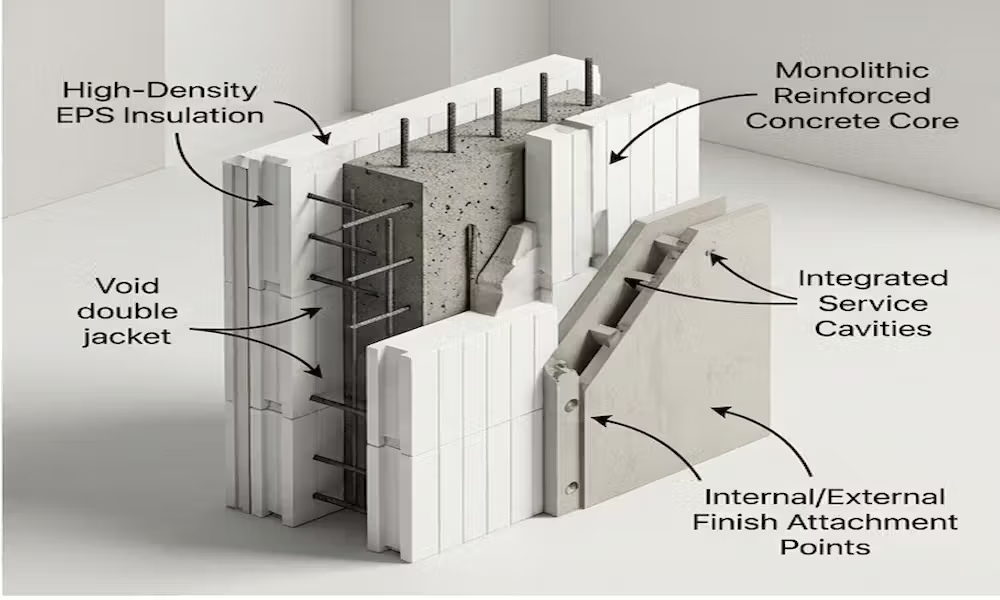
Insulated Concrete Forms (ICF) is an advanced, high-performance building method that replaces traditional wood framing or standard blockwork. The system utilizes hollow, lightweight blocks manufactured from high-density expanded polystyrene (EPS). These blocks are interlocked on-site—much like precision engineering blocks—to create the exact footprint and structural layout of the home's walls.
Once steel rebar reinforcement is placed inside the hollow core, high-strength concrete is poured into the framework. Unlike traditional removable timber shuttering, the foam blocks remain permanently in place on both sides of the concrete core, creating an incredibly strong, monolithic (single-piece) structural wall wrapped in two continuous layers of premium insulation.
Why We Specialize in ICF for Cornwall Projects
Every luxury residence we build is shaped by the site conditions, architectural intent, and long-term performance objectives of the project. For many high-end builds in Cornwall, ICF emerges as the technically superior choice for several critical reasons:
1. Unmatched Resistance to Extreme Coastal Environments
Cornwall’s clifftop and coastal plots face intense weather exposure. ICF structures feature a solid, steel-reinforced concrete core that provides exceptional structural stability. This monolithic barrier can easily withstand severe gale-force winds and provides ultimate resistance against structural degradation caused by constant moisture and salt-air exposure.
2. Elite Thermal Efficiency and Passive House Performance
True modern luxury is defined by how a home feels on the inside. Traditional building methods often suffer from thermal bridging (heat escaping through gaps or structural studs). Because ICF provides a continuous twin-layer insulation envelope with virtually no air infiltration, it regulates indoor temperatures effortlessly. When paired with triple glazing and an MVHR (Mechanical Ventilation with Heat Recovery) system, ICF construction effortlessly achieves Passive House energy standards, cutting heating requirements by up to 50%.
3. Acoustic Dampening for Total Indoor Tranquility
Coastal storms and high winds can create significant indoor noise in traditional builds. The dense mass of an ICF concrete core combined with the sound-absorbing properties of EPS foam acts as an exceptional acoustic barrier. It reduces outside noise transmission by roughly half compared to standard framing, ensuring a serene, quiet indoor living environment no matter the weather outside.
4. Absolute Freedom for Contemporary Architecture
Ambitious architect-designed homes often feature complex engineering demands, such as expansive open-plan layouts, dramatic cantilevers, and heavy minimal-frame glazing systems. The inherent load-bearing strength of reinforced concrete allows ICF to support massive structural spans and architectural loads without the need for intrusive internal support columns, preserving the clean, flush lines of your design.
Technical Precision: Attaching High-End Finishes to ICF
A common question when exploring ICF for luxury builds is how premium external and internal finishes are achieved. The interlocking blocks feature integrated, heavy-duty vertical fastening strips embedded within the foam every few inches.
- Exterior Cladding: Whether your architectural vision calls for natural Cornish stone walling, marine-grade timber cladding, or specialist coastal render systems, finishes are mechanically fastened directly to these internal webs or applied seamlessly over the stable foam face.
- Interior Details: Drywall and bespoke internal joinery are secured cleanly to the internal fastening strips. Recesses for smart home cabling, hidden services, and flush architectural detailing are cut cleanly into the internal foam layer before finishes are applied, ensuring flawless execution
Our Collaborative Approach to Advanced Building Systems
Delivering high-end ICF residential construction requires meticulous pre-construction planning and specialist on-site execution. At Warvena Construction, we collaborate closely with private clients, architects, and structural consultants from the earliest phases of design development.
Through our Early Contractor Involvement process, we evaluate your site logistics, ground conditions, and architectural goals to ensure the ICF system is integrated seamlessly into the build sequence—protecting your design intent, budget clarity, and project timeline.
Frequently Asked Questions
How long must the turnbuckle bracing remain in place after the pour?
The engineering alignment bracing must remain fully secured for a minimum of 48 to 72 hours post-pour, depending on ambient temperatures. While concrete sets structurally within 24 hours, it requires a few days to achieve the compressive strength needed to safely support its own dead weight and any wind loading without the risk of deflecting or micro-cracking.
Does the fluid pressure of a 6–7 inch slump concrete mix increase the risk of a blowout?
Yes, fluid concrete exerts high hydrostatic pressure, but the mix is designed this way to ensure it flows into every gap around the steel rebar. The risk of a blowout is controlled not by making the mix thicker, but by limiting the pour rate to 3 to 4-foot vertical lifts per hour. This allows the lower layers of concrete to begin their initial chemical set, turning from a fluid to a semi-solid state and reducing the pressure on the bottom foam blocks before the next layer is added.
How do you verify that there are no hidden air pockets or voids inside the wall after pouring?
We use a combination of pre-pour mix adjustments, systematic mechanical pencil vibration, and simple on-site diagnostic checks. During the pour, a crew member works the exterior of the wall, tapping the foam lightly with a rubber mallet; a hollow sound indicates a void, while a dull thud confirms solid concrete consolidation. On highly sensitive structural sections, thermal imaging cameras can be used a few hours post-pour to verify total coverage, as the curing concrete radiates a uniform heat footprint.
Can ICF walls be poured during heavy rain or freezing temperatures?
One of the major advantages of ICF is its weather resilience. Because the foam forms act as a high-performance insulation jacket, they protect the concrete core from freezing temperatures and retain the natural heat generated by the chemical curing process (heat of hydration). During heavy rain, pouring can proceed as long as the open top of the wall is shielded to prevent water from diluting the mix before it enters the formwork.
What happens if a blowout actually occurs during the pour sequence?
If a section of foam bursts, the pump operator stops immediately. The crew uses emergency blowout kits—pre-cut plywood panels, 2x4 timber studs, and heavy-duty drywall screws—to span the broken section and compress the foam back into place. Once the structural patch is mechanically screwed into the surrounding plastic ties, the spilled concrete is cleared, and the pour resumes.