Embarking on the journey to build a bespoke architectural home or a high-performance Passivhaus is an extraordinary milestone. Yet, for many high-net-worth individuals and developers, the excitement of designing a dream property is quickly overshadowed by a harsh commercial reality during the traditional procurement process.
To safeguard your investment, a shift in strategy is required. By introducing a main contractor into the conversation long before the design is finalized, you can transform cost management from a reactive damage-control exercise into a proactive asset.
The Solution: What is Early Contractor Involvement (ECI)?
Early Contractor Involvement (ECI) is a collaborative procurement framework that breaks down the silos between design and construction. Instead of waiting until your technical design is locked in to speak with a builder, you bring a specialized main contractor to the table during the early stages of the architectural design process.
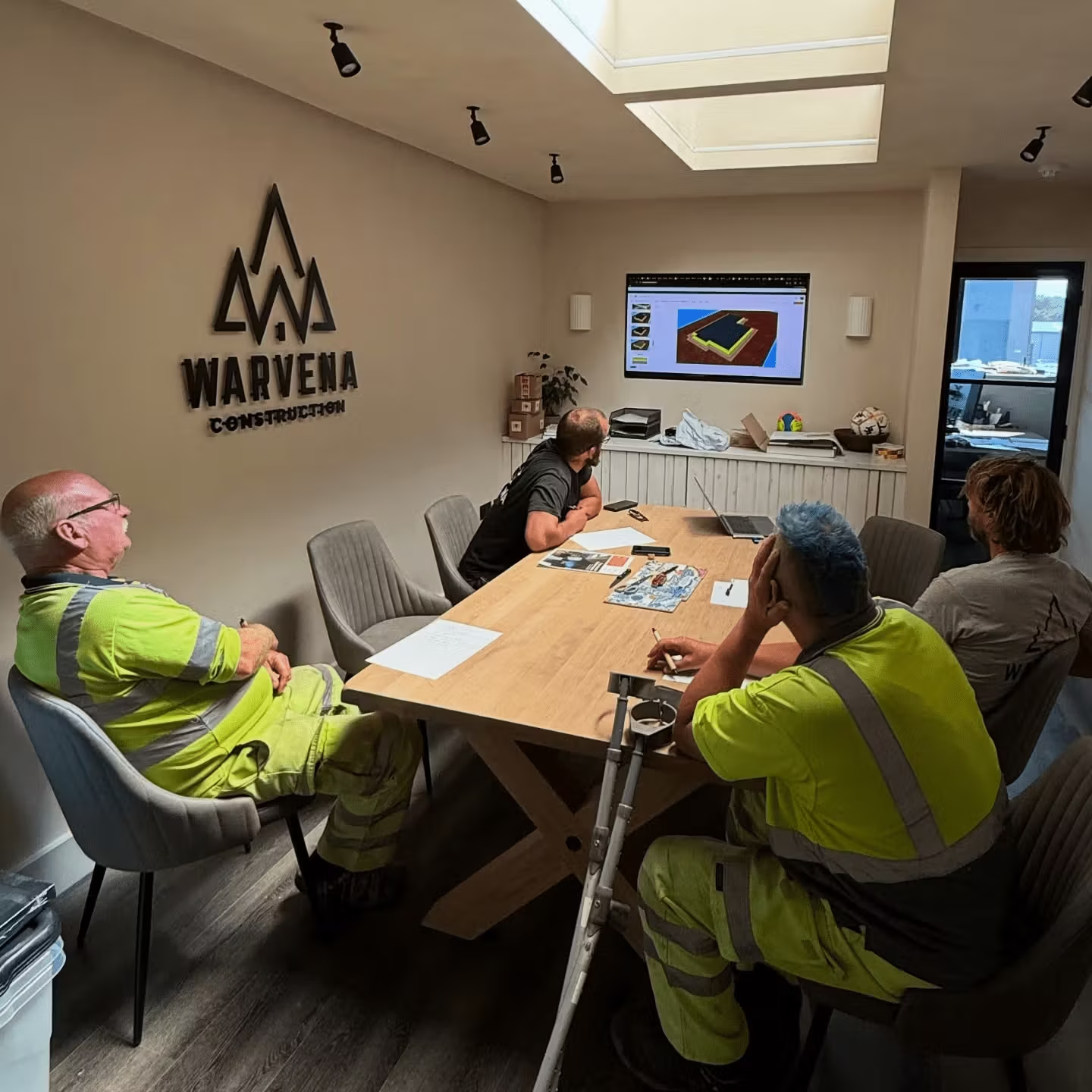
ECI establishes a dedicated tri-party alliance consisting of the client, the architect, and the contractor. This collaborative unit operates transparently, ensuring that every line drawn on paper by the design team is instantly validated against current market pricing, buildability constraints, and supply chain logistics.
Four Ways ECI Rigorously Controls Construction Costs
1. Real-Time Cost Modeling vs. Outdated Estimations
Traditional cost estimates produced during the design phase are often based on historical data or generic square-meter pricing metrics. However, in a volatile economic climate, material costs and specialist labor rates fluctuate rapidly.
Through ECI, your contractor applies live supply chain testing and real-time cost modeling. Because they are actively purchasing materials and managing live sites, they can forecast actual costs with extreme precision, replacing guesswork with firm data before you commit to structural engineering or planning applications.
2. Intelligent Value Engineering
Value engineering is often misunderstood as simply cutting costs or downgrading finishes when a budget blows out. Under an ECI framework, true value engineering happens organically during design development.
For instance, if your heart is set on achieving the stringent criteria of a certified Passivhaus, your contractor can suggest specific, high-performance insulation configurations or structural framing adjustments. This allows you to meet strict thermal performance targets while selecting more cost-effective structural techniques—preserving both the architectural integrity and your budget.
3. De-risking Complex Sites and Logistics
Cornwall boasts some of the most spectacular coastal and rural landscapes in the UK, but these geographies introduce unique construction complexities. Narrow rural lanes, steep cliffside topography, and exposed marine microclimates demand meticulous planning.
A local main contractor involved early can conduct rigorous site access reviews and assess sub-surface ground conditions before structural decisions are set in stone. Identifying whether a site requires specialized piling or heavy all-terrain crane access prevents unexpected five-figure variations once the ground is broken.
4. Supply Chain Streamlining and Price Locking
Global supply chains remain unpredictable, with long lead times on specialized components like triple-glazed Passivhaus windows, MVHR systems, or bespoke architectural timber frames.
ECI enables the construction team to identify long-lead items early in the timeline. This foresight allows the contractor to secure manufacturer production slots and lock in material pricing early, insulating your project budget from mid-build inflationary spikes.
Aligning Aspiration with Financial Reality
A stunning architectural design is only a success if it can actually be built within your financial framework. Choosing elite bespoke building partners in Cornwall who prioritize transparent cost management ensures that your creative vision remains securely anchored to commercial predictability.
Instead of treating cost as a final hurdle to clear at tender stage, ECI embeds fiscal discipline into every phase of design development, providing total peace of mind from conception to completion.
Frequently Asked Questions
Does Early Contractor Involvement limit my architect's creative freedom?
Not at all. ECI is highly valued by elite architects because it provides them with a technical sounding board. Rather than restricting creativity, it gives your architect the practical parameters required to design confidently, knowing their concepts can be executed beautifully within your budget constraints.
How are fees handled during the ECI phase?
A contractor typically charges a transparent, pre-agreed professional service fee to cover the time spent on cost modeling, site logistics planning, and supply chain engagement. This modest upfront investment is almost always recouped multiple times over by avoiding costly redesign fees and preventing mid-construction variations.
Can I see a real-world example of how these overall budgets break down?
Yes. Financial transparency is vital when planning a premium project. To see a detailed breakdown of realistic material, labor, and compliance figures for high-end coastal and sustainable properties, you can read our comprehensive guide to construction costs in Cornwall. If you would like to discuss how to implement an ECI framework for your upcoming build, feel free to reach out to the team directly at Warvena Construction.
THINKING ABOUT A HIGH-PERFORMANCE BUILD IN CORNWALL?
Warvena are TrustMark registered, Passivhaus-experienced builders based in Redruth. We work across Cornwall with architects, developers and private clients to deliver homes that perform.