Heritage
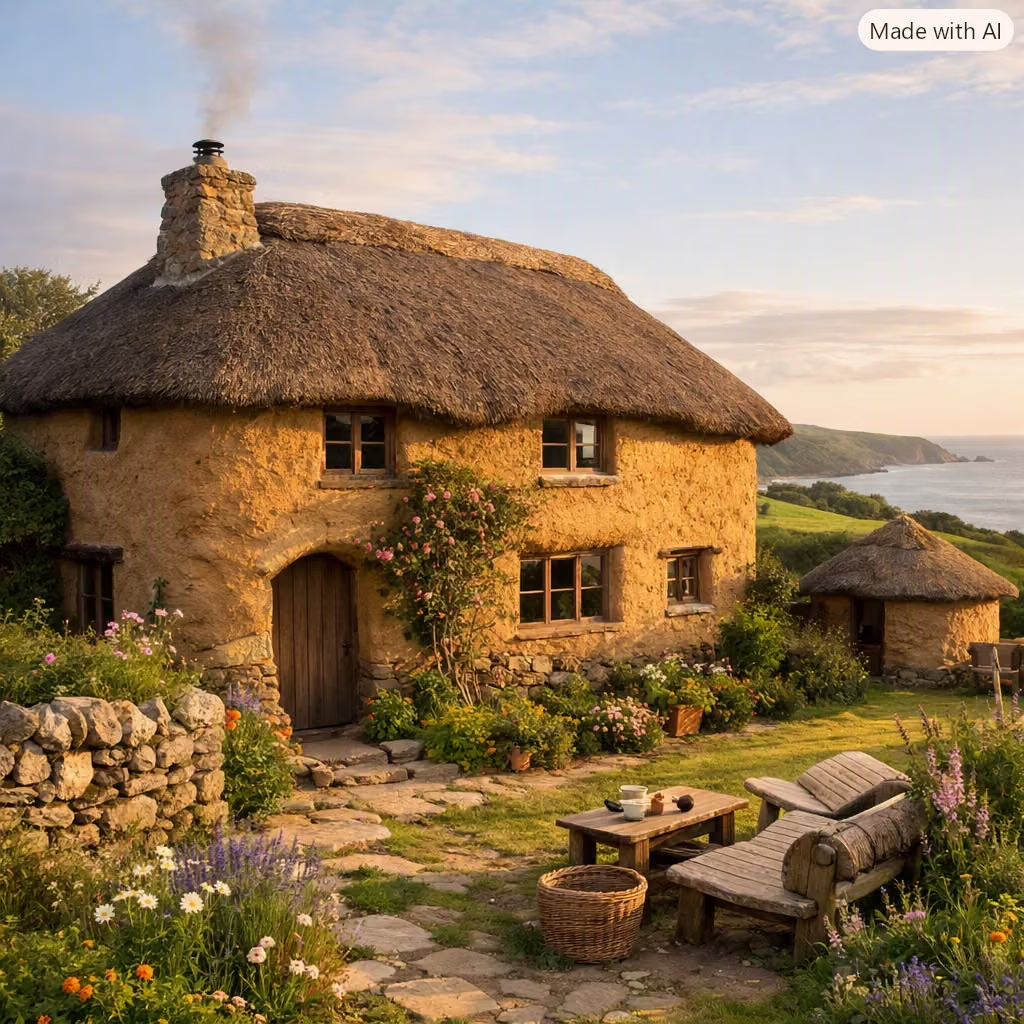
An Ancient Technique Still Standing Across the County
Cob, a mix of subsoil, straw and water built up in thick courses, has sheltered Cornish families for over 500 years, with many original cob cottages still occupied around villages near Wadebridge and the Camel estuary. Its thick, load-bearing walls were born of necessity, using what the land provided, but today that same quality makes cob one of the lowest-embodied-carbon materials available to a self-build or renovation.
Performance
Why Earth Walls Still Outperform on Comfort and Efficiency
A well-built cob or rammed earth wall behaves unlike almost any modern material. Its significant thermal mass absorbs heat during the day and releases it slowly overnight, smoothing out temperature swings without mechanical intervention. Benefits our clients consistently see include:
• Excellent thermal mass, reducing heating and cooling demand
• Breathable walls that regulate internal humidity naturally
• Extremely low embodied carbon compared with concrete or brick
• A textured, tactile finish that ages with genuine character
Design Language
Pairing Earthen Walls With a Modern Coastal Aesthetic
On renovation and extension projects near Wadebridge and the wider Camel valley, we often expose original cob walls internally, pairing their soft, undulating surface with clean joinery, restrained lighting and pared-back interiors. The result lets the material itself do the talking, a warm, organic backdrop for an otherwise contemporary luxury interior.
Sourcing & Craft
The Specialist Skill Behind Every Earth Wall
Cob and earth construction is a genuine craft, requiring an understanding of local subsoil composition, moisture management and traditional lime rendering. We work with specialist conservation builders to repair historic cob structures and, where a project calls for it, to introduce new rammed earth or cob detailing that meets modern building standards without losing its authenticity.
Related Reading
Earth building is a natural companion to a wider low-carbon specification. Many of our clients exploring cob also look at our approach to low carbon and passive house design, where lifecycle carbon is considered from foundation to finish.
Frequently Asked Questions: Cob & Earth Building
Answers to the questions we're asked most often by clients considering cob or earth construction for their project.
Is cob suitable for a new build, or only for repairing older homes?
Both. We regularly repair and extend historic cob cottages, and we can also introduce new rammed earth or cob detailing into a contemporary new build where the design and site conditions support it.
Does cob meet current building regulations?
Yes, when detailed correctly by an experienced team. Cob and rammed earth can meet modern thermal and structural standards, particularly when combined with natural insulation to boost performance.
How does cob compare to modern insulation for energy efficiency?
Cob's strength is thermal mass rather than insulation value alone. Paired with a breathable natural insulation layer, it delivers excellent year-round comfort with a far lower carbon footprint than conventional block and cavity construction.
Can you repair an existing cob property?
Yes. We work with specialist conservation techniques to repair and stabilise historic cob walls while preserving their character and structural integrity.
Build With One of Cornwall's Oldest Sustainable Materials
Speak with Warvena Construction about specifying cob or rammed earth for your next low-carbon project near Wadebridge, the Camel estuary or further afield.